Symbolism of Lilies: Purity, Rebirth, and Love
Few flowers carry as much symbolic weight as the lily. For thousands of years, across civilizations from ancient Egypt to modern weddings, lilies have stood for purity, rebirth, devotion, and love. A white lily can bless a marriage in the morning and comfort a funeral in the afternoon, and both meanings are true at once.
This article explains the symbolism of lilies: their ancient myths, their religious meanings, what each color says, the famous types, and when to give them, including one important safety note for pet owners.
The Short Answer: Purity, Rebirth, and Devotion
At their core, lilies symbolize purity, devotion, and renewal. White lilies add innocence and sympathy. The flower’s clean shape and clear colors made it a natural symbol for things people consider sacred: new life, honest love, and the hope that follows loss.
Lilies are also among the oldest known cultivated plants in the world. Images of lilies appear in ancient Minoan frescoes on the island of Crete dating back to around 1580 BCE, more than 3,500 years ago. The word “lily” comes from the Latin “lilium,” which traces back to the Greek “leirion.” Only plants of the genus Lilium, around a hundred species, are true lilies, a detail worth knowing, because several beloved “lilies,” like the calla lily and lily of the valley, are not true lilies at all, even though they share the name and some of the symbolism.
Like a color that changes meaning with its shade, the lily’s meaning changes with its context: a wedding, a funeral, a spring garden, or a myth. The flower stays the same. The occasion writes the message.
Greek Myth: Born From Hera’s Milk
Greek mythology gives the lily its most famous origin story. When Hera, queen of the gods, was nursing the infant Heracles, drops of her milk fell to earth and transformed into white lilies. This story forever linked lilies with motherhood, femininity, and divine nurturing, and it is why the white lily has stood for purity and divine grace ever since.
Roman mythology added a darker twist. Venus, goddess of beauty, love, and desire, envied the purity of the lily so much that she cursed its center, raising the pistil sharply upward. The myth is a backhanded compliment: even the goddess of beauty felt threatened by the flower’s innocence, and her curse only made its shape more distinctive.
Together, these myths explain the lily’s double nature. It is a flower of mothers and goddesses, of purity so complete that even gods react to it. That divine association followed the lily into every culture that adopted it afterward.
Egypt: Rebirth and the Sun
In ancient Egypt, lilies were intertwined with beliefs about creation, rebirth, and the afterlife. The white and blue water lilies featured in temples and tombs were associated with the sun god Ra and the idea of resurrection: like the sun, the flower seemed to die each night and return each morning.
A note of honesty belongs here: the Egyptian “lily” in many ancient texts is the water lotus, often confused with true lilies. The symbolism, however, transferred cleanly, because both flowers share the same visual poetry: a beautiful bloom rising from water and mud, renewed daily. For the Egyptians, that daily return made the lily a symbol of eternal life, and it appeared in burial art as a promise that death was not the end.
Christian Symbolism: Mary and Easter
Few flowers have been woven into Christian iconography as deeply as the white lily. The Madonna lily, Lilium candidum, became linked with the Virgin Mary, representing her purity, chastity, and divine grace. In paintings of the Annunciation, the angel Gabriel often carries or stands beside white lilies, announcing Mary’s role with a flower that means innocence.
The Easter lily, Lilium longiflorum, carries the second great Christian meaning: resurrection. White lilies became central to Easter celebrations, symbolizing the resurrection of Christ and the promise of eternal life. The flower’s pure white color represents purity, while its trumpet shape suggests the heralding of good news. Lilies blossoming from the earth each spring also symbolize the cycle of life, death, and rebirth, which is why they appear at both Easter and funerals.
A gentle legend adds a third layer: many believe white lilies grew in the Garden of Eden from Eve’s tears of remorse after she offered Adam the apple. The flower born from regret became a symbol of restored innocence, which is exactly why it comforts mourners: it says that purity can return after a fall.
China: One Hundred Years of Love
In Chinese culture, lilies carry one of the most romantic meanings of any flower. The Chinese name for lily, “bai he,” sounds like the phrase for “one hundred years of good union,” so lilies became a traditional wedding flower symbolizing a marriage that lasts a century. Giving lilies at a wedding is not just decoration. It is a blessing spoken in flowers.
The same flower also stands for purity and good fortune in Chinese tradition, and it appears in celebrations of new beginnings of many kinds. Where Western lilies often speak at funerals, Chinese lilies often speak at weddings, and both traditions agree on the core idea: lilies mark the moments when life changes permanently.
The Victorian Language of Flowers
In Victorian England, flowers carried coded messages, and lilies were among the most eloquent. The white lily symbolized purity and sweetness. The tiger lily conveyed pride or prosperity. Lily of the valley, though not a true lily, signified the return of happiness, and it became a favorite for expressing renewed joy after sorrow.
The Victorians also valued lilies for their scent and their shape, and they planted them as symbols of refinement. A bouquet’s meaning depended on its mix: white lilies for respect, pink for admiration, yellow for joy. That color code survives today in florists’ advice, and it is the most practical part of lily symbolism for anyone choosing a bouquet.
What Each Lily Color Means
Color sharpens the lily’s meaning considerably, and choosing the right one is half the message:
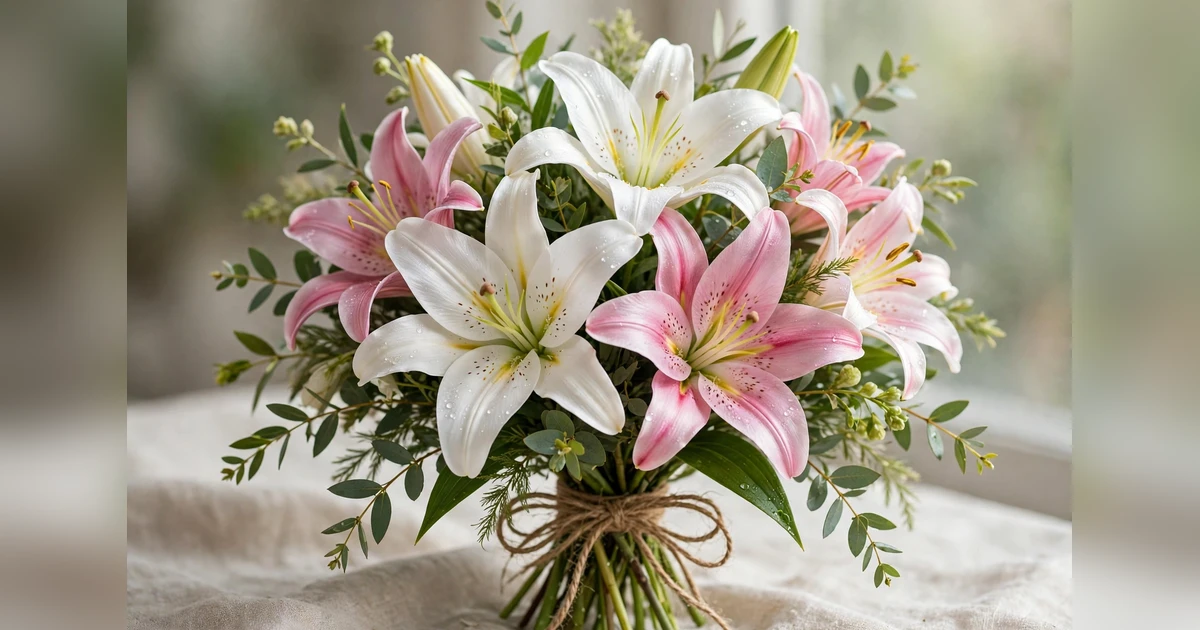
White lilies mean purity, innocence, virtue, and rebirth. They are the most traditional sympathy flower in Western countries, expressing the hope that the soul is at peace, and they are equally traditional at weddings and christenings, because they speak of new beginnings. One color, both ends of life.
Pink lilies mean femininity, admiration, compassion, and gentle love. They are perfect for expressing appreciation to mothers, daughters, or friends, and they make lovely birthday or Mother’s Day gifts. Pink stargazer lilies particularly represent prosperity and abundance, and the stargazer’s ambition, since the famous fragrant pink Oriental lily, bred in the 1970s, made pink lilies among the most popular in the world.
Yellow lilies mean happiness, gratitude, joy, and good health. They suit friendships, thank-yous, and celebrations, and they carry none of the solemnity of white. A yellow lily says “I am glad you exist” without ceremony.
Orange lilies, especially tiger lilies, mean confidence, energy, pride, and passion. They are bold flowers for bold messages: encouragement, admiration for someone’s courage, or celebration of an achievement.
Red lilies mean passionate love, desire, and courage. They are the romantic lilies, chosen when pink feels too gentle and a rose feels too expected.
Purple lilies mean dignity, royalty, admiration, and success. They suit achievements, honors, and messages of deep respect.
Famous Lily Types and What They Carry
A few named lilies carry their own symbolism. The Madonna lily, Lilium candidum, is the ancient white lily of Mary and purity, still grown for its history as much as its beauty. The Easter lily, Lilium longiflorum, is the resurrection flower, trumpet-shaped and pure white, tied to spring and Easter.
The Stargazer lily is the modern star: a fragrant pink Oriental lily bred in the 1970s, whose upward-facing blooms and strong scent made it one of the world’s most beloved lilies. It means prosperity, ambition, and admiration, and it dominates bouquets for good reason.
The Tiger lily, with its spotted orange petals, means pride, confidence, and wealth, and its dramatic look matches its bold message. The Calla lily, elegant and sculptural, means beauty and magnificent grace, though botanists will remind you it is not a true lily at all. Its symbolism is real even if its family tree is different.
When to Give Lilies
Lilies suit life’s biggest moments, and matching the color to the occasion is the art of it. White lilies belong at weddings, christenings, and funerals alike: new beginnings and farewells both. Pink lilies belong at Mother’s Day, birthdays, and thank-yous to people you admire. Yellow lilies belong at celebrations, recoveries, and friendly gestures. Red lilies belong to romance. Orange lilies belong to encouragement and congratulations.
Lilies return each spring in nature, and that seasonal return is part of their power: they do not just symbolize rebirth, they perform it, pushing through cold soil every year. Giving lilies in spring doubles the message.
One practical caution matters more than etiquette: lilies are highly toxic to cats. Even small amounts of pollen, petals, or vase water can cause severe kidney failure in cats, and this is a veterinary emergency. If the recipient has a cat, choose a different flower, or give lilies only where cats cannot reach them, and warn the recipient clearly. A beautiful gift should never become a danger.
Frequently Asked Questions
What do lilies symbolize?
Lilies primarily symbolize purity, devotion, and rebirth, with specific meanings by color: white for innocence and sympathy, pink for admiration, yellow for joy, orange for confidence, and red for passionate love.
What do white lilies mean at a funeral?
White lilies at a funeral express sympathy, respect, and the hope that the departed soul is at peace, with the promise of rebirth and eternal life.
Why are lilies associated with Easter?
The Easter lily symbolizes the resurrection of Christ and new life. Its white color means purity, and its trumpet shape suggests the announcement of resurrection.
Are lilies safe around cats?
No. Lilies are highly toxic to cats, and even pollen or vase water can cause kidney failure. Keep lilies away from cats entirely.
Final Thoughts
The lily has survived more than 3,000 years of human meaning because its message never narrows to one thing. It is purity and passion, wedding and farewell, myth and garden, all in one elegant bloom. Greek gods, Egyptian priests, Christian artists, Chinese newlyweds, and Victorian romantics all found their own truth in it, and none of them were wrong.
When you give lilies, you join that long conversation. Choose the color with care, match it to the moment, and let the flower say what words sometimes cannot: that something pure, hopeful, and enduring is being honored. For a deeper guide to lily meanings by type and color, the lily flower meaning guide is a useful companion.