Nature Symbolism: Hidden Meanings Behind the Natural World
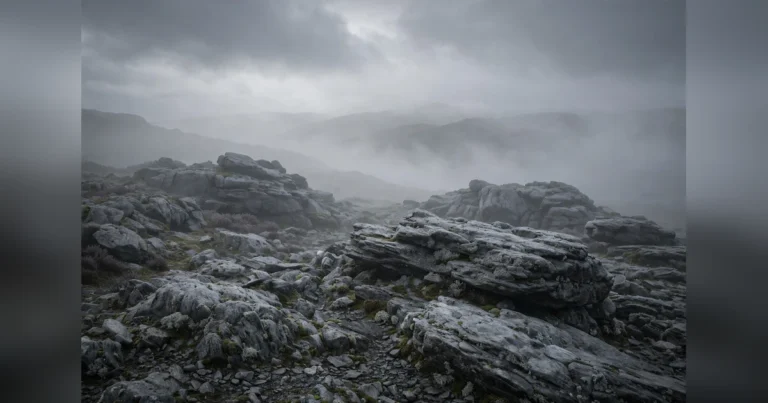
A tree growing through a crack in a rock, sunlight breaking through dark clouds, or a river moving around fallen branches can tell a story without using words. People have looked to nature for meaning throughout history. Natural objects and events often remind us of human experiences, including growth, loss, freedom, change, and survival. This is the idea behind nature symbolism. Writers use forests to create mystery, artists use flowers to express beauty, and different cultures connect animals with particular qualities or beliefs. Even ordinary things such as rain, stones, and changing seasons can carry personal meaning. Nature does not have one universal symbolic language, though. The meaning of a natural element often depends on its surroundings, cultural background, and the person interpreting it.
What Is Nature Symbolism?
Nature symbolism is the use of natural elements to represent ideas, emotions, experiences, or deeper messages. These elements can include plants, animals, weather, landscapes, water, and celestial objects.
For example, a growing tree may represent personal development, while a storm can suggest conflict or an uncertain period in life. A sunrise often represents a fresh beginning, and a river may represent the passage of time.
These meanings appear in literature, paintings, mythology, religious traditions, films, and everyday expressions.
Nature symbolism can work in two ways:
- Cultural symbolism: Meanings passed through stories, traditions, beliefs, and artistic practices.
- Personal symbolism: Meanings people develop through their own memories and experiences.
A person who grew up near the ocean may associate waves with childhood and comfort. Another person may connect the same waves with danger or uncertainty.
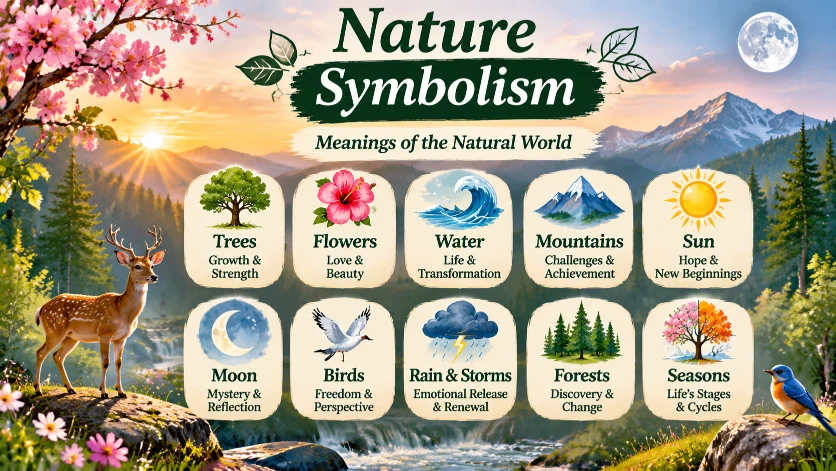
10 Natural Elements and What They Represent
Nature provides many symbols that writers, artists, and communities use to communicate ideas. Some are widely recognized, while others have meanings that change between cultures.
1. Trees: Growth, Family, and Strength
Trees are among the most recognizable natural symbols. Their roots, trunks, branches, and leaves provide different ways to represent human life.
Roots are often connected with ancestry, family history, and a sense of belonging. The trunk can represent stability and strength, while branches may symbolize opportunities, relationships, and future generations.
A tree that survives strong winds can also represent resilience. Its ability to continue growing after losing branches reminds us that difficult experiences do not always stop personal development.
In literature, trees often appear as meeting places, witnesses to history, or symbols of a character’s connection with the past.
Common meanings: Growth, family, stability, wisdom, ancestry, and resilience.
2. Flowers: Beauty, Love, and the Passage of Time
Flowers are often used to express feelings that people find difficult to explain directly.
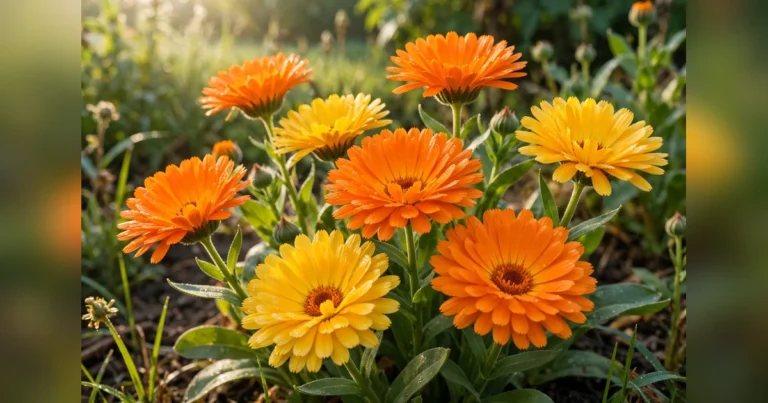
A rose may represent romantic love, while a forget-me-not is commonly associated with remembrance and lasting affection. White flowers can suggest purity in some traditions, while yellow blooms may be connected with friendship and happiness.
Flowers also have a connection with the passage of time. They bloom, reach their fullest form, and eventually fade. This natural cycle can represent youth, beauty, change, and the temporary nature of life.
In poetry, a flower may represent a person, a relationship, or a moment that cannot last forever.
Common meanings: Love, beauty, remembrance, renewal, affection, and temporary life.
3. Water: Life, Emotions, and Transformation
Water is essential for life, which makes it a powerful symbol across many cultures.
Calm water may represent peace, clarity, and emotional balance. A flowing river can suggest the passage of time or the journey of life. Deep water may represent hidden feelings, mystery, or the unknown.
Rain can have different meanings depending on the situation. It may suggest sadness in one story and renewal in another because rain also helps plants grow.
Water is also connected with cleansing and transformation in many religious and cultural traditions.
Common meanings: Life, emotions, cleansing, renewal, change, and mystery.
4. Mountains: Challenges, Ambition, and Achievement
Mountains often represent challenges that require patience and effort to overcome.
Climbing a mountain can symbolize working toward a difficult goal. Reaching the top may represent achievement, self-confidence, or a new perspective.
Mountains also appear in spiritual traditions as places of reflection, isolation, and connection with the sacred.
Their size and permanence can create a sense of strength and stability. At the same time, their difficult paths remind us that meaningful progress can require effort.
Common meanings: Strength, ambition, achievement, endurance, and spiritual reflection.
5. The Sun: Energy, Hope, and New Beginnings
The sun provides light and warmth, making it a common symbol of life, energy, and hope.
A sunrise often represents a fresh start. It can suggest that a difficult period is ending and a new opportunity is beginning.
Sunlight breaking through clouds may represent clarity after confusion or hope after disappointment.
In mythology and religious traditions, the sun has also been connected with life-giving power, creation, and divine figures.
Common meanings: Hope, life, energy, clarity, warmth, and renewal.
6. The Moon: Mystery, Reflection, and Change
The moon has inspired stories, poetry, and artistic traditions for centuries.
Its changing phases provide a natural image of cycles and transformation. The new moon can represent beginnings, while the full moon is often associated with completion, mystery, or heightened emotions in literature and folklore.
Moonlight also creates a different atmosphere from sunlight. It can make familiar places appear mysterious or peaceful.
Because the moon is visible at night, it is frequently connected with dreams, reflection, imagination, and the hidden parts of human experience.
Common meanings: Mystery, intuition, reflection, cycles, dreams, and transformation.
7. Birds: Freedom, Hope, and Perspective
Birds are often associated with freedom because they can travel through the sky and move across long distances.
A bird flying away may represent independence or leaving an old situation behind. A dove is widely used as a symbol of peace, while an eagle is often connected with strength and vision.
Birds can also represent communication and perspective. Their ability to view the landscape from above creates a useful image of seeing a situation from a different point of view.
However, different bird species carry different cultural meanings, so their symbolism should not be treated as identical.
Common meanings: Freedom, peace, independence, hope, communication, and vision.
8. Rain and Storms: Emotional Struggles and Renewal
Rain and storms often represent difficult emotions or periods of conflict.
Heavy rain can create an atmosphere of sadness, uncertainty, or isolation in a story. A storm may represent an argument, a personal crisis, or a major change.
But rain also supports life. It waters crops, fills rivers, and helps dry land recover.
This gives rain another meaning: renewal after hardship.
A story that begins with dark clouds and ends with sunlight may use changing weather to show a character moving from confusion toward understanding.
Common meanings: Emotional release, conflict, cleansing, renewal, and change.
9. Forests: Mystery, Discovery, and the Unknown
Forests often appear in fairy tales, myths, and adventure stories as places where characters face uncertainty.
A dark forest may represent fear, confusion, or the unknown. A peaceful green forest can suggest safety, healing, and a return to nature.
Entering a forest may symbolize the beginning of a personal journey. A character may leave a familiar world, face unexpected challenges, and return with new knowledge.
Forests also represent the relationship between people and the natural environment.
Common meanings: Mystery, discovery, transformation, solitude, and connection with nature.
10. Seasons: The Different Stages of Life
The four seasons provide one of the clearest natural ways to represent the changing stages of human life.
| Season | Common symbolic meanings |
|---|---|
| Spring | Birth, hope, growth, and new opportunities |
| Summer | Energy, happiness, freedom, and abundance |
| Autumn | Maturity, change, harvest, and letting go |
| Winter | Rest, hardship, silence, and reflection |
Spring is often used to represent childhood or the beginning of a relationship. Summer may represent youth and activity, while autumn can suggest maturity and acceptance.
Winter sometimes represents old age, loneliness, or difficult experiences. However, it can also mean rest and preparation for another beginning.
These associations are common in literature and art, but they are not universal cultural rules.
Nature Symbolism in Literature and Poetry
Writers use natural elements to communicate ideas without explaining every emotion directly.
A character standing alone in the rain may create a feeling of sadness. A flower growing in an abandoned place may suggest hope or survival. A river separating two characters may represent distance or a barrier between their lives.
Nature also helps establish the mood of a story.
For example, a peaceful garden can create a feeling of safety, while a dark forest may prepare readers for uncertainty or danger.
Some well-known literary examples include:
- William Wordsworth’s poetry: Nature often connects with memory, imagination, and human emotion.
- William Shakespeare’s plays: Natural imagery is used to express love, ambition, conflict, and the passage of time.
- Robert Frost’s poetry: Forests, roads, trees, and seasons often help explore personal decisions and human experiences.
- Romantic literature: Mountains, oceans, flowers, and landscapes frequently represent beauty, freedom, and the power of the natural world.
In these works, nature helps readers understand a character’s inner world.
Nature Symbolism in Different Cultures
Natural symbols do not have exactly the same meaning everywhere. Religious beliefs, traditional stories, geography, and historical experiences influence how communities interpret them.
Chinese culture: The pine tree is often associated with longevity and endurance because it remains green through cold seasons. Bamboo is also connected with flexibility, strength, and integrity.
Japanese culture: Cherry blossoms are strongly associated with the temporary nature of life because their blooming period is brief. They are especially important during the spring tradition of hanami, when people gather to enjoy the blossoms.
Ancient Egyptian culture: The lotus flower was connected with creation, rebirth, and the sun. Its daily opening and closing helped make it an important image in religious art and mythology.
Greek mythology: Natural features such as rivers, mountains, trees, and springs were often connected with gods, nymphs, and mythological stories.
These examples show why cultural context matters when interpreting nature. The same plant or landscape may carry different messages in different traditions.
How to Understand Nature Symbols in Everyday Life
You do not need to study mythology or literature to notice natural symbolism. It can appear in photographs, dreams, artwork, decorations, and personal experiences.
When interpreting a natural symbol, consider these questions:
- What is the natural element? Identify whether it is a tree, flower, animal, landscape, or weather event.
- What is happening around it? A flower in a garden may communicate something different from a flower growing through damaged ground.
- What emotion does it create? Think about whether the scene feels peaceful, frightening, hopeful, or uncertain.
- Is there a cultural connection? Consider whether the object has a particular meaning in the tradition being discussed.
- What does it mean in the wider story? Look at how the natural element relates to the people, events, or message.
For example, a tree losing its leaves may suggest the end of a stage in life. But if the same tree begins growing new leaves, it may represent recovery and another opportunity.
Frequently Asked Questions About Nature Symbolism
What is the main meaning of nature symbolism?
Nature symbolism uses natural elements to represent ideas and human experiences. Trees may represent growth, water can represent emotions, and seasons often symbolize different stages of life.
What symbolizes nature and life?
Trees, flowers, rivers, and green landscapes are commonly used to represent nature and life. Trees are especially associated with growth and continuity, while water represents the basic conditions needed for living things to survive.
What does nature symbolize in literature?
In literature, nature can represent emotions, personal struggles, freedom, change, and the relationship between humans and the world around them. Writers often use landscapes and weather to establish mood or communicate a character’s feelings.
What flower represents new beginnings?
Daffodils are commonly associated with spring, hope, and renewal. Cherry blossoms can also represent new beginnings and the temporary beauty of life.
What animal symbolizes freedom?
Birds are among the most widely recognized symbols of freedom. Eagles, doves, and other flying birds may represent independence, peace, or the desire to move beyond limitations.
What does water symbolize spiritually?
In many spiritual traditions, water is associated with purification, renewal, life, and transformation. Its meaning depends on the religious and cultural context.
Why are seasons used as symbols of human life?
The changing seasons provide a natural way to represent different stages of life. Spring suggests beginnings, summer represents activity, autumn suggests maturity, and winter can represent rest or reflection.
Final Thoughts
Nature symbolism gives familiar parts of the natural world meanings that connect with human experiences. A tree can remind us of family and growth, a river can suggest the movement of time, and a storm can represent a difficult period that eventually passes. These meanings are shaped by culture, literature, and personal memories. That is why the same natural scene can communicate different ideas to different people. Looking closely at nature helps us notice these connections and understand how people have used the natural world to express their thoughts and feelings.