Grey Color Symbolism: Meaning, Psychology, and Spiritual Power
Grey symbolizes neutrality, balance, wisdom, and the middle ground between extremes. It is the colour that sits between black and white, and that position is its meaning: grey refuses to take a side, it holds both ends at once, and it finds calm in the space between. Grey is the colour of stone, of ash, of clouds before the rain, of hair that has earned its years, and of the quiet strength that does not need to shout.
Grey, or gray, is an intermediate colour between black and white. It is a neutral or achromatic colour, meaning that it has no chroma. It is the colour of a rain or storm cloud, of ash, and of lead. That plain description hides a rich symbolic life: grey is one of the most complex colours we have, and it means many things at once, some of them contradictory.
What Is Grey?
Grey is created by mixing black and white, which are considered polar opposites, making grey a symbol of finding a middle ground or blending contrasting elements. It is technically not a colour at all, in the sense that it has no hue of its own. It is what remains when black and white meet without fully becoming either.
The English word comes from Old English graeg, related to Germanic words for the colour. Latin writers used canus for grey or hoary hair and griseus for a greyish shade, the source of words such as grisaille, a painting technique in shades of grey. That history tells us something: grey has always been the colour of age, of stone, and of things that have weathered time.
Like a color that changes with light, grey changes with its setting, warm silver in sunlight and cold slate in shade. Grey is never one thing. It is a family of shades, from pale dove to dark charcoal, and each shade carries a slightly different feeling.
In nature, grey is often found in rocks, stones, and clouds, giving it an earthy and natural feel. Grey is a very common colour for animals, birds, and fish, ranging in size from whales to mice. It provides a natural camouflage and allows them to blend with their surroundings. That camouflage is part of grey’s meaning: it is the colour of blending in, of not being seen, of quiet survival.
Neutrality and Balance: The Middle Ground
Grey is the colour most commonly associated with neutrality, balance, and compromise. In Europe and North America, surveys show that grey is the colour most commonly associated with neutrality, conformity, boredom, uncertainty, old age, indifference, and humility. Only one percent of respondents chose it as their favourite colour.
That survey result is revealing. Grey is not loved, but it is trusted. It is the colour of the middle ground, and the middle ground is where compromise happens. Grey is considered to be a colour of compromise, as it sits between the extremes of black and white, symbolizing a middle ground or a lack of extremes.
Grey is also associated with practicality and dependability. It is the colour of the grey suit, the grey office, the grey city street. It says: I am serious, I am reliable, and I am not here to impress you. That is why grey is so common in business attire and interior design: it conveys a sense of sophistication and formality, without demanding attention.
From a positive perspective, grey’s neutrality is linked to the ability to value different points of view and to remain impartial. A person who wears grey, or who chooses grey for a room, is often saying: I can see both sides. That is a strength, not a weakness. Grey is a diplomatic colour, and it is used in many different ways, depending on the colours used with it.
Wisdom, Maturity, and Old Age
Grey is a symbol of maturation and is often associated with grey hairs, which can also be linked to wisdom, dignity, and responsibility. Grey hair is the most visible sign of ageing, and in almost every culture, it carries meaning.
In the Hebrew Bible, grey hair could mark age and accumulated judgment. A grey head was not merely a sign of decline. It could be an earned crown, visible evidence that a person had remained alive through many seasons. Hebrew tradition relates the colour grey to wisdom.
Grey began as a material fact before it became a moral one. Wool came from sheep whose fibres were not uniformly white, and cloth made from those fleeces carried the colours of smoke, dust, and weather without requiring elaborate dyeing. Ash, charcoal, slate, lead, and weathered wood supplied other greys. The colour was therefore the colour of work, of weather, and of time passing.
Grey is also associated with practicality, stability, and composure. It can convey a sense of sophistication and formality, often seen in business attire or interior design. But grey’s relationship with age speaks to us of experience and wisdom, of knowing how to be and sobriety. A grey-haired person is not just old. They are experienced, and that experience is a form of wisdom.
Humility, Poverty, and the Grey Friars
In antiquity and the Middle Ages, grey was the colour of undyed wool, and thus was the colour most commonly worn by peasants and the poor. It was also the colour worn by Cistercian monks and friars of the Franciscan and Capuchin orders as a symbol of their vows of humility and poverty.
Grey and brown garments also suited penitential and ascetic lives. Franciscan friars were often called Grey Friars because of their undyed or grey habits. Their colour could signal humility and poverty to admirers, while critics could read the same plain cloth as deprivation or social lowliness.
That history gives grey a spiritual meaning: humility. To wear grey is to say: I do not need luxury, I do not need display, and I am content with what is plain and honest. In Christianity, grey is commonly viewed as symbolic of death of the body while the soul remains eternal. Ashes are usually grey in colour, and therefore a natural correlation exists between the two. Grey is the colour of ash, and ash is the colour of what remains after the fire has gone out.
Grey symbolizes restraint, maturity, concealment, and the quiet strength of remaining present without demanding to be seen. That is a powerful meaning, and it is why grey is still the colour of monastic life, of mourning, and of quiet dignity.
The Dark Side of Grey: Boredom, Sadness, and Ambiguity
Grey can also evoke feelings of dullness, monotony, or lack of emotion, particularly when used excessively or inappropriately. In literature and art, grey is sometimes used to represent ambiguity, uncertainty, or a lack of clarity. Overall, the interpretation of grey can vary depending on cultural and personal associations, but it generally represents a balance between extremes and a sense of calmness or detachment.
Grey is the colour most associated with stone, from which life is not born, as happens with the earth, but rather remains stable and immutable, in addition to transmitting a certain coldness and lack of heat. That coldness is part of grey’s reputation: it can feel distant, indifferent, and unfeeling.
The absence of chromaticism also makes grey linked to boredom, which it can facilitate, to monotony and routine, to apathy and conformity, and to the lack of ambition, strength, and ability to fight. A grey day, a grey office, a grey city: these are images of a life without colour, without excitement, and without hope.
Grey is also a symbol of mystery, consider a grey and misty path that is obscured. That mystery can be beautiful, or it can be frightening. A grey fog hides what is ahead, and that uncertainty can be a source of anxiety. In a European survey, only one percent of men said grey was their favourite colour, and thirteen percent called it their least favourite colour. Grey is, by the numbers, the least loved colour in the Western world.
From a negative perspective, as grey is associated with old age and age in addition to ash, it is generally linked to the idea of progressive loss, of the proximity of the end. Grey can be the colour of decline, of things fading, of energy leaving. That is the shadow of grey, and it is real.
Grey in Psychology
In colour psychology, grey is often seen as a conservative colour that can evoke feelings of calmness and composure. It is considered to be a colour of compromise, as it sits between the extremes of black and white, symbolizing a middle ground or a lack of extremes.
Grey is perceived due to an intermediate point between the capture of light and its absence, or the blocking of the former by some object. Technically and at a chromatic level, grey would be the midpoint or the mixture between white and black. That midpoint is the key to its psychology: grey is the colour of the in-between, and the in-between is where most of life happens.
A grey personality is conservative, reliable, and organized. Grey personalities can also be seen as being very serious in nature. They have very little time for silly and immature things, which can make them seem a bit uptight. But they are also dependable, calm, and steady, and in a crisis, they are the people you want beside you.
Grey can seem conservative and serious, but it can also represent wisdom and sophistication. Grey can be used to evoke feelings of calm; however, it can become somewhat boring and monotonous. All shades of grey can be considered cool and soothing and provide a sense of tranquility.
Another of grey’s meanings on a psychic level is that of concealment, given that it allows for easy camouflage, and deterioration. Grey hides. It blends in. It does not draw the eye. That can be a strength, when you need to be discreet, or a weakness, when you need to be seen.
Grey in Art, Culture, and Design
Grey is often the colour you see in a city, with grey streets, parking lots, and buildings. All of which should convey a certain durability and foundational stability. The modern city is grey because grey is the colour of concrete, of steel, and of stone, and those are the materials of the modern world.
Grey is neither masculine nor feminine, but it is a popular modern colour that is often associated with an industrial feel. According to research, grey is the least favourite colour in Western countries like the United States. And yet, grey is everywhere in modern design: in homes, in offices, in cars, in clothes. It is the colour of the modern world, even if it is not the colour we love.
One example of grey becoming a symbol of conformity is that of a painting by Pablo Picasso known as Guernica, from 1937, which represents war and industrialization. Picasso painted Guernica in black, white, and grey, and the absence of colour is part of its power. The grey of Guernica is the grey of smoke, of ash, of a city destroyed, and of a world without hope.
In Western cultures, grey is mostly associated with balance, sophistication, stability, and sadness or isolation. In some Christian and European settings, grey joined mourning, old age, repentance, and dust. In contemporary design, grey may suggest neutrality and security, yet a grey landscape can also signal exhaustion, pollution, or emotional withholding.
Grey is a true grey colour is technically not a colour at all and is considered neutral like black and white. This is why grey is associated with neutrality. However, grey can also represent balance and stability since it is halfway between black and white.
Shades of Grey and What They Mean
Grey is not one colour. It is a family, and each shade has its own feeling.
Silver grey is light, bright, and elegant. It is the colour of the moon, of polished metal, and of a clear winter morning. Silver grey means sophistication, clarity, and a quiet kind of luxury. It is grey at its most beautiful.
Charcoal grey is dark, deep, and serious. It is the colour of coal, of a storm cloud, of a suit worn to a funeral. Charcoal grey means strength, formality, and gravity. It is grey at its most powerful.
Slate grey is cool, blue-grey, and steady. It is the colour of roof tiles, of a calm sea, of a mountain in the distance. Slate grey means stability, endurance, and a connection to the earth.
Ash grey is pale, soft, and fragile. It is the colour of what remains after a fire, of dust, of a cigarette’s end. Ash grey means loss, memory, and the passage of time.
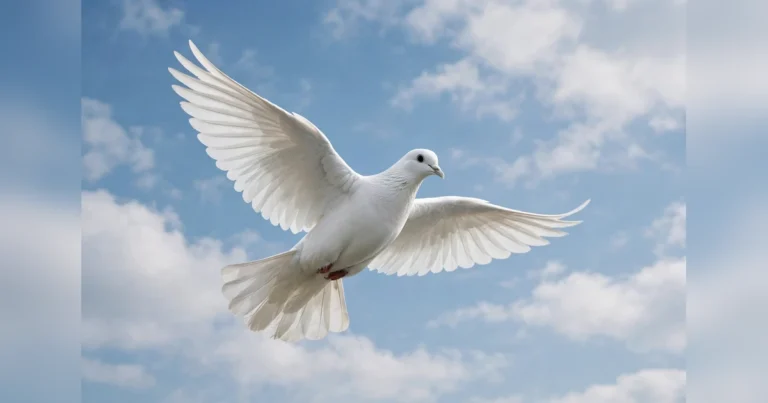
Dove grey is gentle, warm, and peaceful. It is the colour of a dove’s feathers, of a soft morning, of a quiet room. Dove grey means peace, gentleness, and calm.
Smoke grey is hazy, uncertain, and mysterious. It is the colour of a mist, of a dream, of a path you cannot see clearly. Smoke grey means ambiguity, mystery, and the unknown.
When you choose a shade of grey, you are choosing a meaning. Light grey is hopeful. Dark grey is serious. Warm grey is gentle. Cold grey is distant. The shade matters, and it changes everything.
The Grey Area: Living Between Black and White
We speak of a “grey area” when something is not clearly right or wrong, not clearly black or white. That phrase is grey’s most famous contribution to language, and it captures its deepest meaning.
Life is mostly lived in the grey area. Most decisions are not clear. Most people are not purely good or purely bad. Most truths are not simple. Grey is the colour of that complexity, and it asks us to be comfortable with uncertainty.
Grey’s shadow begins as a useful refusal. It declines the costume of certainty, the bright promise, the public display. Often, a person wears grey to mark a period of endurance or a hard-won maturity. Grey is the colour of the person who has learned that life is not simple, and who is at peace with that.
When grey keeps appearing around you, the question is not whether the world has selected a message and placed it in your path. It is whether you are ready to sit with ambiguity, to hold two truths at once, and to find calm in the middle.
Grey in Dreams
Dreaming of grey often places you in a world where the obvious signal has been removed. Colour has drained from a room, a face, a road, or the sky, and the dream asks you to notice what remains when spectacle can no longer guide you.
If you dream of a grey sky, it may mean uncertainty, or a mood of sadness, or a time of waiting. The grey sky is not a storm, but it is not sunshine either. It is the in-between, and the dream is asking you to be patient.
If you dream of grey hair, it may mean wisdom, or ageing, or a recognition of your own experience. Grey hair in a dream is often a positive sign: it means that you have earned your years, and that your experience is a strength.
If you dream of wearing grey, it may mean that you are trying to blend in, or that you are in a period of humility, or that you are seeking balance. The dream is asking you to notice whether you are hiding, or whether you are simply being calm.
If you dream of a grey landscape, it may mean exhaustion, or a feeling of monotony, or a life that has lost its colour. The dream is a warning: it may be time to bring colour back into your life, to find joy, and to remember what makes you feel alive.
Frequently Asked Questions
What does grey symbolize?
Grey symbolizes neutrality, balance, compromise, wisdom, maturity, and the middle ground between black and white. It is the colour of calmness, detachment, and the ability to see both sides.
Is grey a positive or negative colour?
Both. Grey can mean wisdom, sophistication, stability, and calm, but it can also mean boredom, sadness, dullness, and indifference. Its meaning depends on the shade, the context, and the person.
What does grey mean in psychology?
In psychology, grey is seen as a conservative colour that evokes calmness and composure. It is associated with practicality, dependability, and the ability to remain impartial, but also with boredom, monotony, and a lack of ambition.
Why is grey associated with old age?
Grey is associated with old age because of grey hair, which is a visible sign of ageing. In many traditions, grey hair is a symbol of wisdom, dignity, and experience, an earned crown.
What is the grey area?
A grey area is a situation that is not clearly right or wrong, black or white. It is a space of ambiguity and complexity, and grey is the colour that represents it.
What does it mean to dream of grey?
Dreaming of grey often means uncertainty, or a world where the obvious signal has been removed. It can mean wisdom, humility, or a need to find balance, or it can be a warning that life has become monotonous.
What are the shades of grey?
The main shades are silver, charcoal, slate, ash, dove, and smoke. Light grey is hopeful and elegant, dark grey is serious and powerful, warm grey is gentle, and cold grey is distant.
Final Thoughts
Grey is the colour we overlook, and that is its tragedy and its strength. It is not loved like blue, or desired like red, or trusted like green. Only one percent of people call it their favourite. And yet, grey is everywhere: in the stone of our cities, in the clouds of our skies, in the hair of our elders, and in the quiet moments of our lives.
Grey is what remains when black and white meet without fully becoming either. That description sounds abstract until you handle the things that made the colour familiar: a stone worn smooth by weather, wool left close to its sheep’s colour, ash after the flame has gone out, a cloud carrying rain but not yet releasing it.
Grey asks us to be comfortable with the middle, to hold two truths at once, and to find strength in restraint. It is the colour of wisdom, of humility, of balance, and of the quiet courage to remain present without demanding to be seen.
The next time you see grey, do not dismiss it as dull. Look closer. In the grey, there is a whole world: of stone, of cloud, of ash, of age, and of the calm that comes from knowing that not everything needs to be black or white.