Coyote Symbolism in Native American Culture: Trickster, Teacher, and Survivor
Few animals carry as much meaning as the coyote. In Native American traditions, Coyote is one of the most important figures in storytelling: a trickster, a creator, a fool, a teacher, and a survivor, all in one character. His stories are told across more than 50 tribal traditions, from the deserts of the Southwest to the Great Plains and the Pacific Northwest.
Coyote is not a simple hero or villain. He creates the world and then disrupts it. He helps people and then tricks them. He fails as often as he succeeds, and that failure is part of the lesson. This article explains what Coyote symbolizes in Native American culture, in simple terms, and why his stories are still told today.
The Trickster: Cleverness With a Cost
Coyote’s best-known role is the trickster. A trickster is a character who breaks rules, bends the truth, and stirs up chaos, often for fun, often for a reason. Coyote outsmarts stronger animals, deceives people, and turns situations upside down with a joke or a lie.
But Coyote’s tricks are not free. Again and again, his clever plans backfire. He steals food and loses it. He tries to impress others and ends up embarrassed. He cheats and is cheated in return. The stories use humor to teach a serious point: cleverness without wisdom brings trouble.
This is why Coyote is a teacher, not just a joker. Listeners laugh at his failures and learn from them without being lectured. The trickster’s job is to show what happens when pride, greed, or foolishness take over, and Coyote demonstrates it better than any sermon could.
The Creator: Singing the World Into Being
Surprisingly, the same Coyote is also a creator. In several traditions, Coyote helps shape the world itself. In a Maidu creation story, a being called Earth Maker floats on endless waters, and Coyote calls out to him. Together, they sing the world into existence.
In Navajo tradition, Coyote, known as Maii, plays a key role in creation stories and in bringing humans into the Fourth World, the world we live in now, after earlier worlds were destroyed. He is also said to have scattered the stars across the sky, flinging them upward in a careless, playful act that left the constellations where they are.
This creator side shows Coyote’s dual nature. He is not only a disruptor. He is also a maker, someone whose actions, even accidental ones, build the world. Creation and chaos live in the same character, which is exactly the point: the world itself contains both.
The Teacher: Lessons Through Failure
Coyote teaches through failure more than through success. His stories are moral lessons wrapped in comedy, told around fires on long winter nights and passed from generation to generation. They warn about pride, greed, and foolishness while celebrating cleverness and adaptability.
In Navajo culture, Coyote stories form part of the moral education of children. Elders tell them to show what happens when someone disrespects sacred things, ignores advice, or puts selfish wants first. The lesson lands because the listener has already laughed at Coyote doing exactly that.
Coyote also teaches balance. The Navajo idea of hozho means beauty, harmony, and balance, and Coyote’s stories show that balance cannot exist without both sides: good and bad, creation and destruction, wisdom and foolishness. A world with only heroes would teach nothing. Coyote supplies the other half.
Stealing Fire: The Gift That Helps Everyone
One of the most famous Coyote stories is how he stole fire. In versions told by the Shoshone, Karuk, Apache, and other peoples, fire belongs to powerful beings who keep it for themselves. Coyote tricks his way to it, steals it, and carries it to humans, often at great personal cost.
The story matters because Coyote’s trickery finally helps someone else. He is still a thief and a deceiver, but this time his mischief serves people. Fire means warmth, cooked food, and survival. By bringing it, Coyote becomes a hero, not in spite of being a trickster, but because of it.
Other tales follow the same pattern. In one, Coyote defeats a giant monster by letting himself be swallowed, then destroying it from inside. In another, he shapeshifts into a baby to fool five sisters who dammed a river and starved everyone, then breaks the dam and frees the salmon. Cunning, used for others, becomes courage.
The Survivor: Adaptability in the Real World
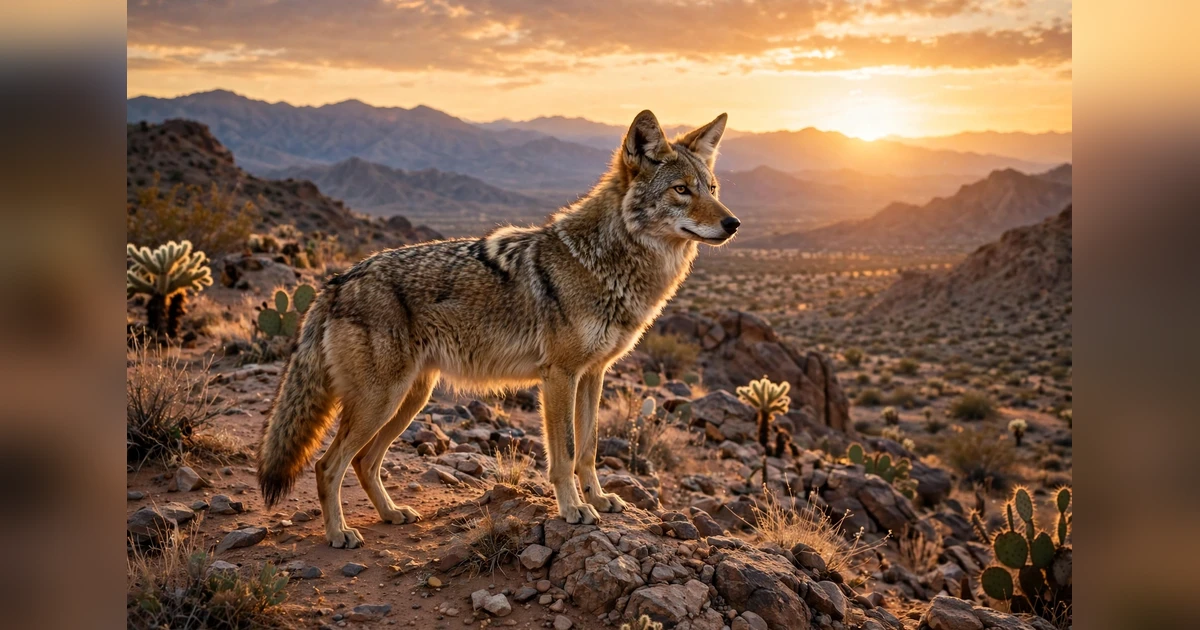
Coyote’s symbolism is grounded in the real animal. Coyotes are among the most adaptable creatures in North America. They live in deserts, forests, mountains, and cities. They eat almost anything, travel far, and survive where larger predators have vanished. In nature, the coyote is a master of making do.
That real adaptability feeds the symbol. Coyote stands for resilience, for finding a way when the obvious way is blocked, and for thriving in changed conditions. When people face a sudden change, a lost job, a move, a new chapter, Coyote is a reminder that survival often belongs to the flexible, not the strongest.
Some traditions even call the coyote “God’s dog,” a mark of respect for an animal that endures. The trickster who survives every story mirrors the animal that survives every landscape.
Coyote Across Tribes: One Figure, Many Faces
Coyote appears under different names and roles across tribes. To the Navajo he is Maii, a sacred figure with his own healing ceremony, Coyoteway. To the Hopi he is connected to Sotuknang, and in Zuni and Apache traditions he plays similar roles as fool and teacher. Among the Lakota and Pueblo peoples, he appears in creation stories and cautionary tales.
The details change, but the core stays the same: a clever, contradictory being who creates and disrupts, helps and harms, teaches and fails. That consistency across so many peoples shows how deep the archetype runs. Coyote is not one tribe’s invention. He is a shared way of thinking about how the world works.
It is worth noting that these stories belong to living cultures, not just old myths. Native elders still tell Coyote stories today, and they still carry moral weight. Reading about Coyote is a chance to listen respectfully to traditions that remain alive.
Coyote in Dreams and Modern Life
In modern spiritual readings, seeing a coyote, in life or in a dream, is often taken as a sign of change, hidden humor, or a lesson arriving in disguise. The coyote may signal that a situation is not what it seems, that a clever solution exists, or that it is time to laugh at your own mistakes and learn from them.
Coyote also stands for not taking yourself too seriously. His stories suggest that the person who can laugh at failure recovers faster than the person who cannot. Adaptability, humor, and humility are Coyote’s gifts, and they are practical ones.
At the same time, Coyote warns against using cleverness selfishly. His worst failures come when he tricks others for his own gain. The modern lesson matches the old one: use your wits to help, not only to win.
Frequently Asked Questions
What does the coyote symbolize in Native American culture?
Coyote mainly symbolizes cleverness, adaptability, trickery, creation, teaching, and survival. He is a paradoxical figure who is both creator and disruptor.
Is Coyote good or evil?
Neither, and both. Coyote is a trickster who helps and harms, creates and destroys. His stories teach that good and bad exist together, and that balance needs both.
Why is Coyote called a teacher?
Because his failures teach moral lessons. Listeners laugh at his mistakes and learn from them, especially about pride, greed, and the consequences of selfish choices.
What is the story of Coyote stealing fire?
In several tribal versions, Coyote tricks powerful beings, steals fire, and brings it to humans. His trickery serves others, making him a hero through cunning rather than strength.
Final Thoughts
Coyote endures because he is honest about human nature. People are clever and foolish, generous and selfish, creative and destructive, sometimes in the same day. Coyote holds all of that in one character and makes it funny, which makes it easier to face.
His stories ask a simple question: will you use your cleverness to help or only to win? The answer, in tale after tale, decides whether Coyote ends as a hero or a fool. For a deeper look at Coyote’s spiritual meanings, the Lori Hope guide is a useful companion.