Summer Solstice Symbolism: Light, Abundance, and the Turning Point
The summer solstice is the longest day of the year. In the Northern Hemisphere it falls around June 20 to 22, when the sun reaches its highest point in the sky and the day stretches longer than on any other date. After it, the days slowly begin to shorten again, almost too slowly to notice at first.
That simple fact has made the solstice a powerful symbol for thousands of years. It stands for light at its peak, abundance, joy, growth, and a turning point. This article explains what the summer solstice symbolizes, where its traditions come from, and why people still gather to watch the sunrise on midsummer morning.
The Longest Day: Light at Its Peak
The word solstice comes from the Latin solstitium, meaning “sun stands still.” At the solstice, the sun appears to pause at the top of its arc before beginning its slow journey back toward winter. For a few days, the sunrise and sunset points barely move, as if the sun itself were holding its breath.
The summer solstice therefore symbolizes light at full power. Darkness is at its shortest. The world is bright for as many hours as it will ever be. In a time before electric light, that mattered enormously. A long day meant more work could be done, more food could be gathered, and the night, with its dangers, was brief.
Light also means clarity in symbolism. The solstice sun leaves little in shadow. It stands for truth seen clearly, for energy, confidence, and for the part of life when things are going well. It is the opposite of the winter solstice, the longest night, which stands for darkness, rest, and waiting for light to return.
Abundance and the Peak of Growth
The solstice arrives when nature is at its most generous. Crops are growing fast, flowers are in full bloom, fruit is forming, and animals are thriving. The solstice therefore symbolizes abundance and fertility, the earth’s ability to provide.
In old farming communities, this was not abstract. The solstice was a checkpoint: if the crops looked strong at midsummer, the harvest would likely be good. People celebrated because there was something real to celebrate. Feasts, music, and dancing at midsummer were thanks for a world in full growth.
Abundance also has a personal meaning. The solstice can stand for a time in your own life when things are full: health, work, friendships, and joy all present at once. Like the longest day, such times feel as if they should last forever. The solstice gently reminds us that they are seasons, not permanent states, and that makes them worth enjoying fully while they last.
Litha: The Pagan Festival of the Sun
In pagan and Wiccan tradition, the summer solstice is called Litha, one of the eight festivals of the Wheel of the Year. The name comes from the Old English month names recorded by the scholar Bede: Aerra Litha and Aeftera Litha, the months before and after midsummer.
Litha honors the sun god at the height of his power, before he begins his slow decline toward winter. It is paired with Yule, the winter solstice, its exact mirror. Where Yule is the longest night and the rebirth of light, Litha is the longest day and light at full strength.
A well-known Litha story tells of two kings: the Oak King, who rules the warm, growing half of the year, and the Holly King, who rules the cold half. At the summer solstice, the Oak King is at his strongest, but the turning has already begun, and at Yule the Holly King will take over. The story captures the solstice’s double meaning: peak power, and the seed of its own ending.
Bonfires, Herbs, and Watching the Sunrise
Solstice traditions cluster around fire and the sun. Across Europe, midsummer bonfires were lit on hilltops and burned through the short night. The fire on the hill answered the sun in the sky, honoring it and encouraging it at its moment of greatest power.
Herbs gathered at midsummer were believed to be at their most potent, and people collected them on solstice morning. Staying awake to watch the sunrise was itself a ritual. The first light of the longest day was something to witness, not sleep through.
These customs survive today. Thousands gather at Stonehenge in England to watch the solstice sunrise align with the Heel Stone, a tradition linked to a monument thousands of years old. In Scandinavia, where some places enjoy nearly 24 hours of daylight, midsummer is one of the biggest celebrations of the year, with dancing, flowers, and bonfires. In Peru, the Inca Festival of the Sun, Inti Raymi, honors the sun god Inti near the southern hemisphere’s winter solstice.
The Christian church later adopted midsummer too, turning it into the feast of St John the Baptist on June 24, with bonfires kept as part of the celebration. The solstice was too important to ignore, so it was folded into the new calendar rather than erased.
The Turning Point: When Light Begins to Fade
The deepest solstice symbolism is the turning point. The longest day is also the day the light begins, invisibly, to fade. From the solstice onward, each day is a little shorter, even though summer is only just beginning. The peak contains its own decline.
This is why the solstice is both joyful and thoughtful. It celebrates the height of summer while quietly acknowledging that nothing stays at its peak. Farmers knew this. They celebrated the growing crops while already planning for the harvest and the winter ahead.
As a life symbol, the turning point speaks to moments of success and fullness. The solstice says: enjoy the peak, and also prepare wisely, because change is already on its way. It is not a sad message. It is a balanced one. Light and dark take turns, and the solstice is the hinge between them.
Colors and Symbols of the Solstice
The colors of the summer solstice echo the sun: golden yellow, orange, and red, with green for fertility and the living earth. Sunflowers, gold candles, and amber are common solstice symbols, along with wheels, which stand for the sun’s round shape and the turning year. Some traditions rolled burning wheels down hills into water, a picture of fire meeting water at midsummer.
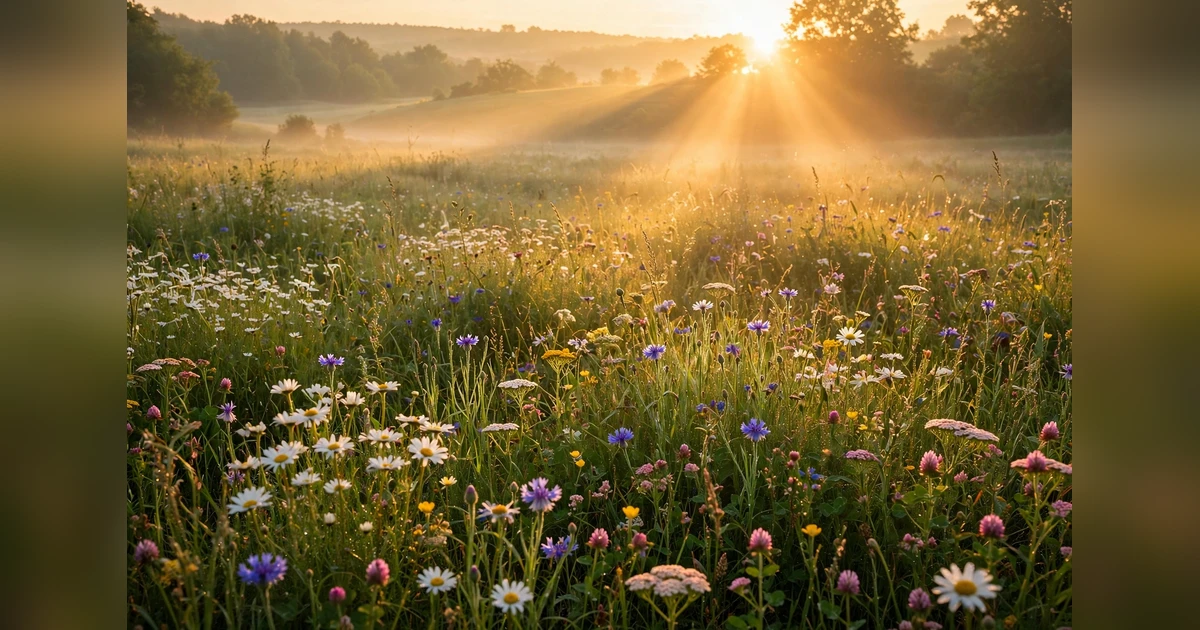
Flowers are also solstice symbols. Midsummer wreaths and garlands, especially in Scandinavia, are made of wildflowers and worn or hung on doors. They stand for the earth’s blooming and for protection through the summer ahead.
The sun itself is the master symbol, of course. Everything at the solstice points back to it: the long day, the bonfire, the gold, the flowers opening to its light. The solstice is, above all, a festival of the sun at its strongest.
The Solstice in Everyday Life
You do not need a bonfire to feel solstice symbolism. The longest day is something everyone notices: evening light that lingers, a walk after dinner in full sunshine, the feeling that the day will never end. That feeling is the solstice working on ordinary life.
It is also a natural time for taking stock. Midyear sits near the solstice, and many people use it to ask what has grown well in their year so far and what needs attention before autumn. The solstice invites that kind of honest, sunlit review: what is at its peak, what is beginning to turn, and what do you want to harvest?
Even in a city, far from fields and stone circles, the solstice offers a simple practice: spend time outside in the light, notice how long the day lasts, and enjoy it without rushing. That is the oldest solstice ritual of all, and it needs no equipment.
Frequently Asked Questions
What does the summer solstice symbolize?
The summer solstice mainly symbolizes light at its peak, abundance, growth, joy, and a turning point, since the days begin to shorten after it.
When is the summer solstice?
In the Northern Hemisphere it falls around June 20 to 22. In the Southern Hemisphere, the summer solstice falls in December.
What is Litha?
Litha is the pagan name for the summer solstice, one of the eight festivals of the Wheel of the Year. It honors the sun at its highest power.
Why do people gather at Stonehenge for the solstice?
Stonehenge is aligned to the solstice sunrise. On midsummer morning, the sun rises over the Heel Stone, and thousands gather to watch a tradition thousands of years old.
Final Thoughts
The summer solstice endures because it is written in the sky. The longest day needs no belief system to be real, and its meanings grow naturally from it: light, abundance, joy, and the honest knowledge that peaks pass. Celebrating the solstice is celebrating a moment of fullness while respecting the turn that follows.
Whether you mark it with a bonfire, a sunrise walk, or simply a long evening outside, the solstice offers the same gift it always has: a day that reminds you to enjoy the light while it lasts. For a deeper look at Litha and its traditions, the Paul O’Mara guide is a useful companion.