Northern Flicker Symbolism: Rhythm, Balance, and Hidden Light
The northern flicker is a woodpecker that breaks the woodpecker rules. It spends more time on the ground than in the trees, digging for ants with a long, barbed tongue. It drums loudly on trees, and sometimes on gutters and siding, announcing itself to the neighborhood. And when it flies, it flashes a secret: bright yellow or red underwings that are invisible while it sits still.
That combination, a grounded bird with hidden brilliance and a loud voice, is why the flicker has become a symbol of adaptability, rhythm, balance, and transformation. This article explains what the northern flicker symbolizes, tying each meaning to what the bird actually does, and where the honest limits of those meanings lie.
Meet the Bird: Colaptes Auratus
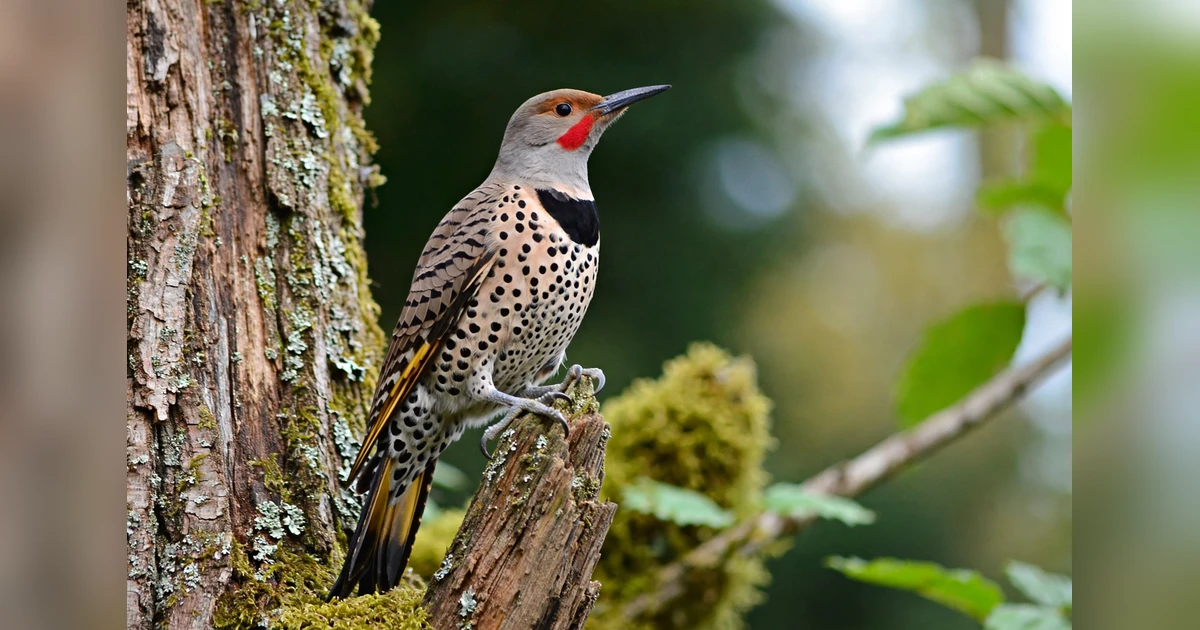
The northern flicker, Colaptes auratus, is a large North American woodpecker in the Picidae family. Its brownish body is patterned with black bars, spots, and a black crescent bib, and its spotted belly and white rump patch are easy field marks. Eastern birds are yellow-shafted, with bright yellow underwings and tail feathers. Western birds are red-shafted, with red underwings instead. The species name “auratus” means gilded or ornamented with gold, a nod to that hidden flash of color.
Two behaviors set the flicker apart from its relatives. First, it feeds on the ground, digging in soil for ants and beetles, where most woodpeckers stay in the trees. Second, it moves comfortably between woods, open ground, parks, and suburban yards, a flexibility few woodpeckers match. It also has a loud, laughing call and a habit of drumming on anything resonant, including metal, to carry its message farther.
A 1900 monograph recorded 124 regional names for this bird, a sign of how widely and locally it was known. The yellowhammer is one old name, and it appears in some traditional teachings about the bird.
Learning to recognize a flicker is easy once you know what to look for. The spotted belly and black bib are visible at a distance, the white rump patch flashes in flight, and the call is a loud, laughing “wick-a-wick-a-wick” that carries across a yard. Flickers also drum on metal gutters, downspouts, and siding, not because they are confused, but because metal carries sound farther than wood. Homeowners sometimes find the noise annoying, but for the bird it is simply good acoustics: the loudest stage wins the largest audience.
Hidden Brilliance: The Color You Only See in Flight
The flicker’s most powerful symbol is its hidden color. While perched, the bird looks brown and speckled, easy to overlook. In flight, it reveals bright yellow or red underwings, a flash of brilliance that was there all along, simply folded away.
That pattern has become a metaphor for hidden potential: qualities that may not be immediately apparent but emerge when we take flight in our life’s journey. The message is gentle and hopeful: what looks ordinary may carry brightness that only movement reveals. If you feel unseen or underestimated, the flicker suggests that your color is not absent, only folded, waiting for the moment you move.
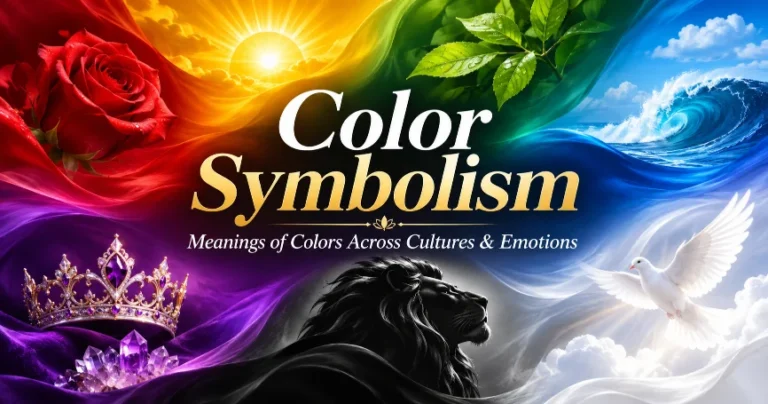
Like a color that only shows in motion, the flicker’s meaning flashes rather than sits still. The color itself adds shades: yellow underwings are read as solar energy, joy, intellect, communication, and spiritual illumination, while red underwings are read as passion, vitality, courage, life force, and transformation. The black markings suggest mystery, protection, and the shadow side of life, and the brown body suggests groundedness, stability, and connection to the earth.
Rhythm and Drumming: Communication Beyond Words
The flicker’s drumming is its signature sound, and its signature symbol. Rhythmic pecking on trees, and sometimes on human structures, connects to heartbeat symbolism and the rhythm of life itself. Drumming represents communication beyond words, a primal language that speaks directly and carries farther than speech.
The lesson most people take from the drumming is about timing and voice. Loud calls and drumming read as having a voice, and the flicker’s habit of choosing resonant surfaces adds a second lesson: choose the moment and the method before you speak. A message delivered on the right surface, at the right time, travels much farther than the same message delivered anywhere.
Drumming also means persistence. The flicker taps repeatedly, patiently, whether it is feeding, communicating, or claiming territory. That repeated tapping, focus applied over time, is why the bird stands for determination and discipline as well as expression.
Ground and Sky: The Balance Symbol
The flicker’s ground-feeding habit gives it its most distinctive symbol: balance. Most woodpeckers live in the trees. The flicker lives between worlds, digging in the soil and climbing trunks, moving from earth to canopy in a single day. That life between ground and trees points to grounding and awareness together: staying rooted while reaching higher.
For people, the balance lesson is practical. The flicker suggests keeping one foot in daily reality, the ground work, the practical details, while still reaching for growth, creativity, and new perspectives. It warns against two opposite traps: living only in the treetops of ideas, or only in the dirt of routine. The healthy life, like the flicker’s day, moves between both.
That same flexibility makes adaptability the flicker’s first theme. A bird that thrives in woods, fields, parks, and yards is a model for changing conditions without losing itself. When your environment shifts, the flicker suggests, you do not need a new identity. You need a wider range.
Persistence, Patience, and Renewal
Watch a flicker feed and you will see patience in action. It digs in the soil for ants and beetles, working steadily with a long tongue, and it repeats the effort across a lawn without hurry. That same patience gives the flicker its persistence symbolism: keep digging, keep tapping, and the nourishment appears.
Seasonal migration adds renewal to the picture. Flickers that migrate return with the changing seasons, and their return has long been read as a fresh rhythm and a new cycle of growth. Seeing a flicker in early spring, after winter’s quiet, naturally inspires optimism, and many people treat a sighting as a sign of a new beginning or a fresh start.
Together, persistence and renewal form a hopeful pair: keep going through the quiet season, and the rhythm will change. The flicker’s year, like a human year, has digging seasons and flying seasons, and both are necessary.
Native Traditions, Told Honestly
Native American traditions hold the flicker in high regard, but honesty requires an important note: no single flicker meaning belongs to all Native American peoples. Nations differ in language, ceremony, and their relationship to particular animals, so any claim about this bird should name the community it comes from. Broad statements that the flicker stands for prayer, protection, or courage in battle are worth holding loosely when no community is attached.
With that caveat, a few specific threads are documented. In some traditions, flickers are seen as lucky birds tied to healing, medicine, and welcoming visitors, and their drumming was thought to be a form of communication with the spirit world. In some legends, the flicker is a bringer of rain. Finding a red flicker feather could predict a happy turn of events, and red feathers are commonly linked with fire.
One example often cited is a Northern California teaching linking dreams of the yellowhammer, an old name for the flicker, to becoming a healer, though accounts differ. The responsible way to hold these threads is as invitations to learn more about specific communities, not as a single universal doctrine. The flicker’s symbolism holds up best when tied to what the bird actually does, rather than stated as fixed doctrine.
Dreams and Sightings: What They May Mean
In dreams and sightings, the flicker is often read as a messenger encouraging awakening, creativity, and new rhythms. A flicker pecking a tree is commonly interpreted as a message to dig deeper into a situation, to look beneath the surface for what is really there. A flicker crossing your path may be read as a nudge to pay attention to your intuition, express yourself more boldly, or embrace a change that is already underway.
Repeated sightings are often treated as a stronger signal: if the same bird keeps appearing, the message may be worth sitting with. But the healthiest reading is personal, not predictive. Ask what the flicker’s themes, adaptability, rhythm, balance, hidden brightness, mean in your current life, rather than treating the sighting as a fortune. The bird offers language for reflection, not a verdict about the future.
Watch a flicker in nature for a minute before you look up any meaning: notice how it moves between ground and tree, and how the flash of color appears only when it flies. That single minute of watching often teaches more than any list of symbols, because the bird’s behavior is the source of its symbolism.
If you see a flicker, a simple practice covers both the practical and the reflective sides. First, enjoy it: watch how it moves between ground and tree, and notice the flash of color when it flies. Then ask one question: where in my life do I need a new rhythm, a steadier balance, or the courage to show a hidden brightness? The answer is usually already waiting.
Frequently Asked Questions
What does a northern flicker symbolize?
The northern flicker primarily symbolizes adaptability, persistence, communication, renewal, and balance, with hidden brilliance from its underwing colors revealed in flight.
What does it mean when you see a northern flicker?
A sighting is often read as a sign of a new rhythm, awakening, or fresh start, and as encouragement to express yourself and embrace change. Treat it as a prompt for reflection, not a prediction.
What is the difference between yellow-shafted and red-shafted flickers?
Eastern flickers are yellow-shafted, with yellow underwings, while western flickers are red-shafted, with red underwings. Both are the same species, Colaptes auratus.
What does a flicker mean in Native American traditions?
There is no single meaning across all Native peoples. Specific traditions link the flicker with healing, medicine, welcoming visitors, and rain, and one Northern California teaching links dreaming of the yellowhammer with becoming a healer.
Final Thoughts
The northern flicker earns its symbolism the honest way: by living it. It adapts to woods, fields, and yards. It drums its message loudly and patiently. It digs in the dirt and climbs into the canopy. And it carries a hidden brightness that only flight reveals.
If a flicker has crossed your path, let it remind you of those four gifts: the flexibility to change ground, the rhythm to say what matters, the balance to stay rooted while reaching higher, and the quiet knowledge that your brightest colors may simply be waiting for the moment you move. For a deeper look at this bird’s meanings, the northern flicker spiritual guide is a useful companion.