Owl Symbolism: Wisdom, Mystery, and Change
An owl means wisdom, intuition, and change. It is a bird that sees in the dark, hears what others miss, and moves in silence. In many cultures, it stands for inner wisdom and the ability to see truth that is hidden from others. In other cultures, it is a messenger of change, a warning, or a bridge between worlds. Both readings are true, because the owl itself holds both sides: light and dark, knowledge and mystery, life and death.
No other bird carries so many opposite meanings. One culture calls the owl wise. Another calls it an omen. One calls it good luck. Another calls it a warning. This guide explains why the owl means so many things, what it means in the cultures that shaped its story, and how to read an owl sighting or a dream without fear.
The Short Answer: Wisdom That Sees in the Dark
Owls symbolize inner wisdom, change, transformation, intuitive development, good luck, and self-actualization. That list comes from cultural symbolism experts, and it fits the bird itself. An owl hunts at night, when most birds sleep. Its large eyes gather light that others cannot use. Its soft feathers let it fly without a sound. Its head turns far enough to look behind itself.
Each of those traits became a symbol. Large eyes became clear sight. Night hunting became seeing hidden truth. Silent flight became quiet wisdom. A turning head became the ability to see all sides of a question. When people say “wise as an owl,” they are talking about that kind of sight, not about book learning alone.
Change is the second core meaning. Owls appear at night, at the edge between day and dark, and that edge is a natural symbol of transition. A change in a job, a relationship, or a belief can feel like stepping into the dark, and the owl is the bird that knows how to move there.
Athena’s Owl: Where Wisdom Began
When you think of a wise old owl, thank the Greeks. The Little Owl, Athene noctua, was sacred to Athena, goddess of wisdom, strategy, and crafts. The owl sat beside her, and it became the symbol of Athens itself. The city’s silver coins carried an owl beside an olive sprig, a picture of wisdom and prosperity together.
Athena’s owl was not just a gentle teacher. It stood for cool-headed strategic thinking, the kind you need in battle or in a hard decision. The owl sat on Athena’s blind side, symbolizing that true wisdom includes seeing what others deliberately ignore. That is a useful definition of wisdom: not knowing everything, but noticing what others miss.
The Other Side: Omen, Death, and Mystery
The owl’s other side is darker, and it is just as old. In ancient Rome, people feared a creature called the strix, a screech owl or mythical bird-monster said to be an omen of civil strife. In Ovid’s Fasti, the strix attacks babies, and nymphs perform rituals to ward it off. Pliny the Elder wrote that owls foretell only evil and are to be dreaded more than all other birds.
In medieval Europe, the owl became linked to heresy and darkness, a very different owl from Athena’s companion.
In parts of China, owls have traditionally been viewed with suspicion and fear. They are often called soul catchers and harbingers of misfortune. In some African traditions, including Yoruba belief, the owl is linked to witchcraft and secrecy, yet also revered as a guardian of sacred knowledge. The fear and the reverence live side by side.
This duality is not a mistake. It is the point. An owl sees in the dark, and the dark holds both wisdom and fear. A bird that can see painful truths will sometimes be welcomed and sometimes be feared, and different cultures chose different sides of that truth.
Native American Owl Meanings: Many Nations, Many Stories
There is no single Native American owl belief. More than 500 nations each have their own stories, and they do not agree. That diversity matters, and any honest guide must name it rather than flatten it into one meaning.
Many Native American tribes believe the owl is the spirit of a deceased ancestor or another spirit. Owls are believed to serve as a bridge between worlds, life and the afterlife. In that reading, an owl is not a threat. It is a teacher, carrying the energy of wise elders and ancestors who have walked the land before.
Other traditions warn. For the Ojibwe, hearing an owl call at night might warn of impending death, but it could also signal ancestral guidance. The Hopi and Pueblo peoples link the burrowing owl to Masau’u, the god of death, fire, and the underworld. The Zuni tell of the Night-Sun, a deity taking owl form to protect children from night terrors.
Owls in Japan, China, India, and Egypt
In Japan, the owl is called fukuro, and the word sounds like “without hardship” or “to protect.” That wordplay made the owl a symbol of good fortune and protection, especially in the north, where the Ainu people regard the owl as a protective spirit. A small owl charm in Japan is often given as a wish for safety and a life without trouble.
In China, the reading is almost the opposite. Owls are often seen as harbingers of misfortune, soul catchers that appear before a death. That contrast with Japan shows how local history shapes a symbol. The same bird, the same night call, can mean luck in one place and warning in another.
In Hindu tradition, the owl is the vahana, the vehicle, of Lakshmi, goddess of wealth, fortune, and prosperity. The symbolism is clear: Lakshmi’s owl can see in the dark, meaning true prosperity comes from navigating confusion and ignorance. Yet the owl is also considered inauspicious if seen before a journey, a reminder that even a goddess’s bird carries a warning.
In ancient Egypt, owls were regarded as gatekeepers of the underworld, helping to protect the souls of those who had strayed into that land. They were seen as auspicious symbols of courage, higher assistance, and supernatural wisdom. In Celtic myth, the owl is linked to the Cailleach, the divine hag or winter goddess, and to messengers from the otherworld.
Like a color that changes with light, an owl changes with culture. The bird stays the same, but the story around it paints the meaning.
Owl Colours and What They Say
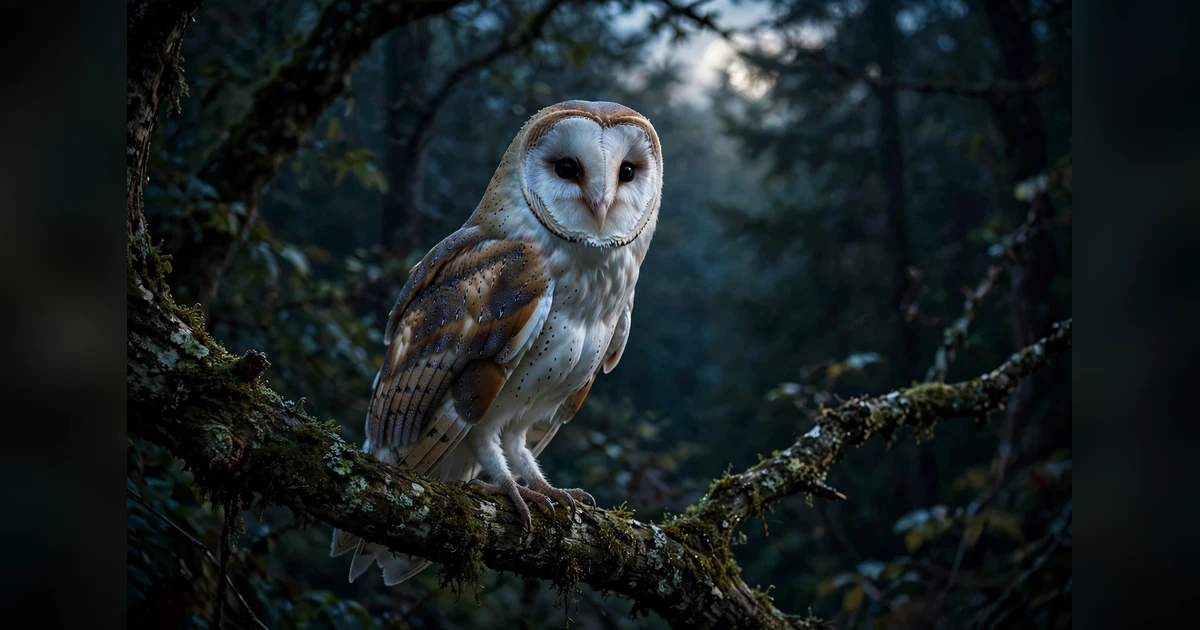
Colour adds another layer to owl symbolism. White owls are seen as drivers of change and transformation. They are the visionaries of the animal kingdom in many modern readings, symbols of a deep connection with a higher self and a desire for cosmic change. A white owl sighting is often read as a sign that a big change is coming.
Black owls are symbols of spiritual protection and of the subconscious mind. They stand for the hidden parts of ourselves, the thoughts and feelings we do not show in daylight. A black owl can mean that it is time to look inward, or that protection is close even when you cannot see it.
Brown owls, the most common, are linked to grounding, patience, and practical wisdom. They are the owl of everyday life, not of grand visions. A brown owl says, “Stay steady, watch carefully, and trust what you have learned.”
What Does It Mean to See an Owl?
Seeing an owl in waking life is often read as a message, but the message depends on the moment. Ask what was happening when you saw it. Were you facing a decision? Were you grieving? Were you starting something new? The owl’s meaning usually fits the question you were already asking.
If you were facing a hard choice, an owl can mean, “Look deeper, and trust your intuition.” If you were grieving, it can mean that a loved one is close in spirit, or that a phase of life has ended and a new one is beginning. If you were starting something new, it can mean good luck and protection, especially in the Japanese reading.
Owls in Dreams
An owl in a dream is often read as a sign of hidden knowledge, intuition, or a truth you have not yet faced. Carl Jung viewed the owl as an archetype of inner knowing, a figure that appears when you must confront hidden fears or access deeper understanding.
A white owl in a dream is often linked to change and transformation. A black owl in a dream is often linked to the subconscious, to a secret, or to a part of yourself that needs attention. An owl that stares at you in a dream can mean that you are being asked to look at something you have been avoiding. An owl that flies away can mean that a message has been delivered and it is time to act.
These readings are traditions and beliefs, not facts. A dream is shaped by your day, your worries, and your memories as much as by any symbol. Use the owl in a dream as a prompt to reflect, not as a verdict. Ask, “What truth am I not seeing?” and let the answer come from your own life, not from a list.
The Owl as a Spirit Animal
As a spirit animal, the owl stands for clairvoyance, intuition, and the ability to see beyond deception. People who feel drawn to the owl often describe themselves as watchers, listeners, and deep thinkers. They notice what others miss, and they are comfortable in quiet.
The owl as a guide asks you to slow down, to listen, and to trust what you sense rather than what you are told. It also asks you to face the dark parts of a situation, the parts that are uncomfortable but true. That is why the owl is linked to shadow work, the practice of looking at the parts of yourself you usually hide.
If the owl is your spirit animal, its lesson is simple: see clearly, even in the dark, and do not be afraid of what you see. Wisdom is not always comforting. Sometimes it is simply true, and the owl’s gift is the courage to look at it.
Watch an owl in nature for a moment before you look up any meaning. Its silent flight, its still patience on a branch, and its eyes that gather the night tell you more than any list can. It is a bird that waits, watches, and knows when to move.
Frequently Asked Questions
What does an owl symbolize?
An owl symbolizes wisdom, intuition, change, transformation, good luck, and self-actualization. In some cultures it also stands for death, warning, or a bridge between worlds.
Why is the owl a symbol of wisdom?
The owl is a symbol of wisdom because of Athena, the Greek goddess of wisdom, whose companion was the Little Owl. The owl’s large eyes, night sight, and quiet watchfulness became symbols of clear seeing and deep knowledge.
Are owls good luck or bad luck?
Both, depending on culture. In Japan, owls mean good fortune and protection. In parts of China and in some Native American traditions, an owl call can be read as a warning. Context and culture decide the meaning.
What does a white owl mean?
A white owl is often read as a sign of change and transformation, a visionary bird that points to a deep connection with a higher self and a desire for cosmic change.
What does it mean to dream of an owl?
Dreaming of an owl is often read as a sign of hidden knowledge, intuition, or a truth you have not yet faced. It can also mean that a change is coming, or that you need to look inward.
Is seeing an owl a bad omen?
Not always. In many traditions, an owl is a guide or a protector, not a threat. A single sighting should not be read as a prediction of death. Look at the context and at what was happening in your life when you saw it.
Final Thoughts
An owl is a bird of two truths. It is wise and mysterious, kind and frightening, a guide and a warning. It sees in the dark, and it asks you to do the same.
When you see an owl, or dream of one, pause and ask what you are not seeing. Look at the moment, feel the tone, and choose the meaning that fits your life. The owl does not give you an answer. It gives you better sight, and that is its gift.
For a deeper look at owl symbolism by colour and culture, with six spiritual meanings explained by experts, see this owl symbolism guide. It covers wisdom, change, protection, and the cultural stories that shaped the owl’s name.