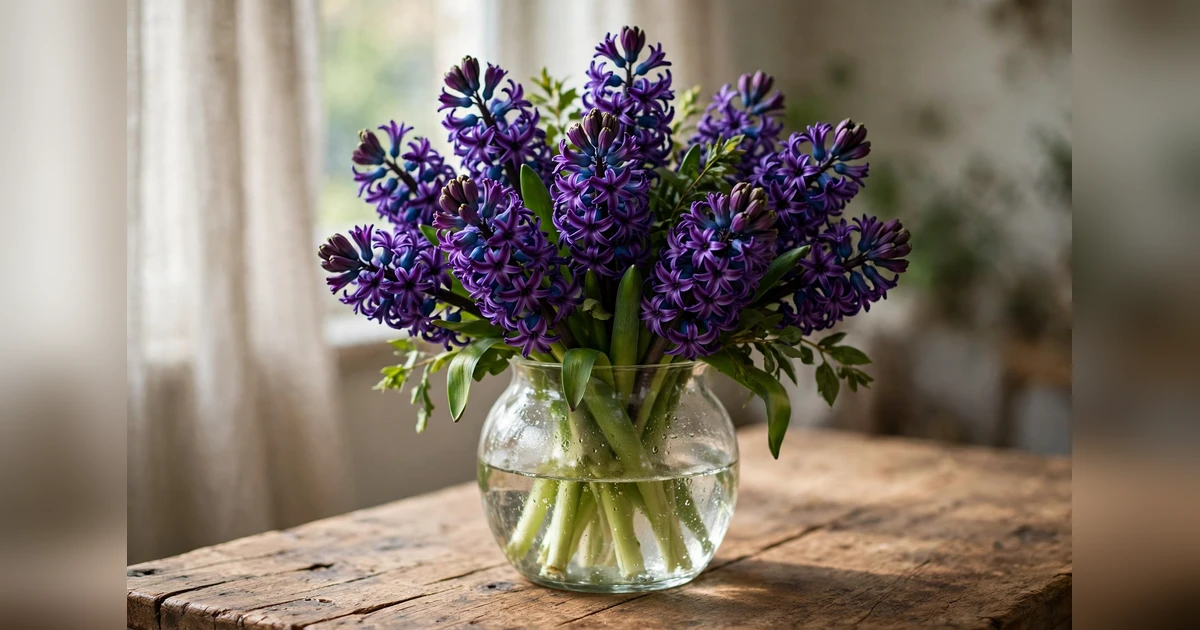
Purple Hyacinth Meaning: Sorrow, Apology, and Forgiveness
A purple hyacinth means sorrow, apology, and forgiveness. It is the flower you give when words feel too small for a mistake, when you want to say, “I am truly sorry, please forgive me,” without a long speech. Its deep purple colour carries the weight of regret, and its sweet fragrance carries the sincerity behind it.
The purple hyacinth is one of the most honest flowers in the language of flowers. It does not pretend a mistake did not happen. It names the sorrow, asks for forgiveness, and offers a hope of renewal. This guide explains where that meaning came from, what the purple hyacinth says in different cultures, and when to give it, and when not to.
The Short Answer: The Apology Flower
Purple hyacinths are commonly associated with sorrow, apology, forgiveness, and dignity. They can be given to express regret or to show a sincere desire for reconciliation. Some modern readings also link their purple colour to royalty or spirituality, but the primary meaning is a solemn apology.
If you have hurt someone you love, a purple hyacinth says what a text message cannot. It says, “I know I was wrong, I feel the weight of it, and I am asking you to forgive me.” It is not a casual flower. It is not for a small mix-up or a late reply. It is for a real mistake, one that deserves a real apology.
The hyacinth’s heady fragrance speaks to the sincerity of the feeling behind it. A flower that smells this sweet, given in this deep colour, tells the person receiving it that the apology is earnest, not rushed. Combined with the myth behind it, it creates a flower heavy with meaning for anyone seeking forgiveness or wanting to convey deep regret.
The Myth of Apollo and Hyacinthus
The name hyacinth comes from a tragic Greek myth involving the sun god Apollo and a Spartan youth named Hyacinthus. According to the myth, Apollo loved Hyacinthus, and the two enjoyed playing games together. One day, while they were playing discus, Apollo accidentally struck Hyacinthus in the head with the discus, killing him.
From the blood that spilled, Apollo created the hyacinth flower as a memorial of his death and their friendship. It is said Apollo’s tears marked the petals with the Greek letters “AI AI,” an expression of mourning. That story is one explanation for how the purple hyacinth became tied to expressing regret and asking for forgiveness.
The myth gave the hyacinth its themes of sorrow, remembrance, and the fleeting nature of youth. It also gave it a second meaning: love that ends too soon, and grief that turns into something beautiful. A hyacinth grows from a bulb buried in the earth and returns each spring, a picture of renewal after loss.
That myth has also connected the hyacinth to love between two men, as it grew from the tragic love of Apollo and Hyacinthus. That reading is part of the flower’s history, and it is worth naming honestly rather than hiding it.
Victorian Meaning: Sorrow, Sincerity, and Forgiveness
In Victorian floriography, the language of flowers, each hyacinth colour carried a distinct message. Blue represented sincerity, pink expressed playful joy, white conveyed loveliness and prayers, yellow meant jealousy, and purple suggested sorrow or apology.
The purple hyacinth carries the deepest and most sorrowful meaning of all the colours. It is directly linked to the grief and regret Apollo felt after Hyacinthus’s death. The deep, rich hue of the petals symbolises a profound sense of loss and remorse.
Because of that strong link, the purple hyacinth is the traditional flower to use when asking for forgiveness. Giving someone a bouquet of purple hyacinths is a very sincere way of saying, “I am truly sorry, please forgive me.” It is a gesture that acknowledges a serious mistake and expresses a deep desire to make amends.
While purple is often associated with royalty and luxury, in the case of the hyacinth, its primary meaning is one of solemn apology. That is what makes it different from other purple flowers. A purple rose can mean enchantment. A purple hyacinth means, “I was wrong, and I am sorry.”
What Each Hyacinth Colour Means
Colour is central to hyacinth meaning, and the purple hyacinth only makes sense beside its sisters.
Blue hyacinths symbolize sincerity and loyalty, and they can also express deep regret. A blue hyacinth is another way to ask for forgiveness, with a calmer, more peaceful tone than purple. Pink hyacinths mean playful joy and a light heart. They are for happy moments, not for apologies.
White hyacinths are associated with purity, remembrance, and reflection. They mean loveliness and prayers for a loved one, and they are a fitting choice for a funeral or a memorial. Yellow hyacinths are linked to jealousy, and they should be given with care. A yellow hyacinth can easily be misunderstood.
Like a color that changes with light, a hyacinth changes with its colour. The flower stays the same, but the bloom on it changes the message. For an apology, choose purple. For a gentle, peaceful apology, choose blue. For a prayer or a memory, choose white. Never choose yellow for an apology, unless you want the person to think you are jealous.
Purple Hyacinth in Other Cultures
In Persian culture, the hyacinth plays a significant role during Nowruz, the Persian New Year celebration. The purple hyacinth specifically conveys forgiveness and mercy, making it an ideal token of apology. Combining purple hyacinths with white hyacinths represents the beauty and purity of forgiveness, purple for the apology and white for the grace that answers it.
In Christianity, hyacinths, especially purple ones, are seen as a sign of prayer and sorrow. Purple is the colour of Lent, a season of repentance and reflection, and the purple hyacinth fits that season’s mood. It is a flower for a time of honest sorrow and a hope of renewal.
In Japan, the hyacinth is linked to honesty and trust. That reading fits the purple hyacinth well. An honest apology is an act of trust. It says, “I trust you enough to tell you the truth about what I did, and I trust our bond enough to ask for forgiveness.”
In some modern readings, the purple hyacinth has taken on meanings of royalty, elegance, and devoted love. It can also symbolize devotion, spirituality, and innocent love. Those readings are real, but they are secondary. When someone gives a purple hyacinth, the first meaning most people will read is sorrow and forgiveness.
When to Give Purple Hyacinths
Give purple hyacinths when you have made a real mistake and you want to ask for forgiveness. They suit a serious apology to a partner, a friend, or a family member. They suit a moment when you need to say, “I was wrong,” and mean it.
They also suit a time of mourning. Purple hyacinths can let others know you are thinking of them after a death in the family. They are a respectful choice for showing support in difficult times, and they carry the dignity that a funeral asks for.
Give them with a short, honest note. A few sincere words matter more than a long letter. “I am sorry. I was wrong. Please forgive me.” That is enough. The flower carries the rest.
Give purple and white hyacinths together when you want to say that forgiveness itself is beautiful. That pairing, purple for apology and white for purity, is a tradition in Persian culture, and it turns a single apology into a fuller message: sorrow, and the hope that follows it.
When Not to Give Purple Hyacinths
Do not give purple hyacinths for a happy occasion. Their meaning is sorrow and apology, and giving them for a birthday, a graduation, or a celebration will confuse the person receiving them. For a happy day, choose pink, blue, or white hyacinths instead.
Do not give them for a small mistake. A purple hyacinth is a heavy flower. Using it for a late text or a forgotten errand makes the apology feel too big, and it can worry the other person. Save it for a mistake that truly matters.
Do not give a purple hyacinth without an apology. The flower alone, with no words, can feel cold. It says, “I am sorry,” but it does not say what you are sorry for. A short note, spoken or written, turns the flower from a symbol into a real apology.
And do not give yellow hyacinths when you mean to apologize. Yellow means jealousy, and it will send the opposite message. Colour is the sentence. Choose it with care.
Watch a purple hyacinth in nature for a moment before you give one. Its deep colour, its sweet scent, and its spring return after a winter underground tell you more than any list can. It is a flower that grows from sorrow into beauty, and that is its message.
Growing and Caring for Hyacinths
The purple hyacinth, Hyacinthus orientalis, is a bulbous flower that blooms in spring. It grows from a bulb planted in autumn, rests through winter, and returns with a tall spike of fragrant blooms. That cycle, burial and return, is part of its symbolism. It is a picture of renewal after a hard season.
Plant hyacinth bulbs in autumn, in well-drained soil, in sun or light shade. Water them in, and leave them alone through winter. In spring, they will rise with a cluster of small, bell-shaped flowers on a single stalk. Their fragrance is strong and sweet, and it can fill a room.
Indoors, hyacinths can be forced in a vase of water, blooming on a windowsill in winter. That is a fitting way to give them. A single forced hyacinth, in a simple vase, with a short note, is a quieter, more personal apology than a large bouquet. It says, “I grew this for you, and I waited for it.”
Care is simple. Keep the soil moist but not wet. After the flowers fade, let the leaves die back naturally, so the bulb can store energy for next year. A hyacinth that returns each spring is a reminder that forgiveness, like a bulb, can come back after a hard season.
Frequently Asked Questions
What does a purple hyacinth mean?
A purple hyacinth means sorrow, apology, and forgiveness. It is the traditional flower for saying, “I am truly sorry, please forgive me.”
Why does the purple hyacinth mean sorry?
It comes from the Greek myth of Apollo and Hyacinthus. Apollo accidentally killed Hyacinthus with a discus, and the hyacinth grew from his blood as a memorial. The flower has carried sorrow and regret ever since.
What is the difference between purple and blue hyacinths?
Purple hyacinths mean sorrow and a request for forgiveness, with a deep, solemn tone. Blue hyacinths mean sincerity and loyalty, and they can also express regret, with a calmer, more peaceful tone.
Are purple hyacinths for funerals?
Yes, purple hyacinths are a respectful choice for funerals and memorials. They stand for sorrow, remembrance, and dignity, and they let a grieving family know you are thinking of them.
Can I give purple hyacinths for a birthday?
No, not usually. Their meaning is sorrow and apology, so they would confuse a birthday celebration. Choose pink, blue, or white hyacinths for a happy occasion instead.
What do purple and white hyacinths together mean?
In Persian tradition, purple and white hyacinths together represent the beauty and purity of forgiveness. Purple stands for the apology, and white stands for the grace that answers it.
Final Thoughts
A purple hyacinth is a flower that tells the truth. It does not hide a mistake, and it does not rush past sorrow. It names the regret, asks for forgiveness, and waits for an answer.
When you give one, give it with honest words and a real desire to make amends. Do not use it to buy your way out of a mistake. Use it to open a door that only honesty can open. If the person forgives you, the flower has done its work. If they need time, the flower will wait with you, like a bulb in winter, for spring.
For a deeper look at hyacinth meanings by colour, with the myth, the Victorian language, and care notes, see this hyacinth meaning guide. It covers sorrow, forgiveness, jealousy, sincerity, and the colours that carry each message.