Banyan Tree Symbolism: Spiritual Meaning, Wisdom, Strength, and Ancient History
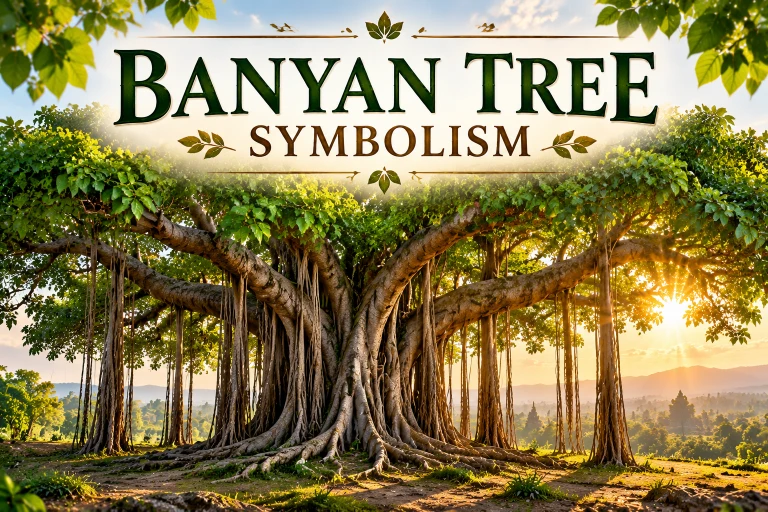
The banyan tree is one of the most beautiful and powerful trees in nature. It is known for its wide branches, hanging roots, and large green leaves. Unlike many other trees, a banyan can continue growing new roots from its branches. These roots reach the ground and become new trunks, allowing the tree to spread across a large area.
Because of this unusual growth, the banyan tree has become a symbol of strength, wisdom, long life, protection, and connection. In many cultures, people see it as a special tree that represents the journey of life and the importance of family.
Banyan tree symbolism is especially important in Indian culture and Hindu traditions. It is often connected with immortality, spiritual knowledge, and the power of nature. Some people also see it as a reminder that strong roots help us grow and face life’s challenges.
But what does the banyan tree really symbolize? Does it have a spiritual meaning? Why is it considered sacred in some religions? And what does seeing a banyan tree mean?
Let’s explore its history, cultural importance, spiritual meanings, and interesting facts.
What Is a Banyan Tree?
The banyan tree is a large tropical tree scientifically known as Ficus benghalensis. It belongs to the fig family and is native to the Indian subcontinent.
One of its most interesting features is its aerial roots. These roots grow down from the branches and eventually reach the soil. Once they enter the ground, they become strong supporting trunks.
Over time, a single banyan tree can spread across a very large area and look like a small forest.
Its thick branches provide shade, while its fruits provide food for birds and other animals. Many people also use banyan trees as peaceful places to rest.
The banyan tree is the national tree of India. It has an important place in Indian culture, history, and religious traditions.
Its unusual ability to keep growing is one reason people connect it with long life and immortality. Kew Science+1
Banyan Tree Symbolism and Its Main Meanings
The banyan tree has several symbolic meanings. These meanings come from its natural features, cultural history, and spiritual traditions.
Here are some of the most common interpretations.
1. Immortality and Eternal Life
One of the strongest meanings of the banyan tree is immortality.
A banyan tree can live for many years and continue spreading through its aerial roots. Even when some branches become old, new roots can grow and support the tree.
This natural process makes it a symbol of life that continues over time.
In Hindu traditions, the banyan is sometimes called Akshaya Vata, which means the eternal or imperishable banyan.
For many people, it represents the idea that life continues through generations. It can also remind us that our actions, values, and memories can live on through the people we leave behind.
2. Strength and Stability
The banyan tree is known for its strong trunk, wide branches, and supporting roots.
Even when it becomes very large, its new roots help support its growing branches.
Because of this, people often connect the banyan tree with strength and stability.
It can represent someone who remains strong during difficult times. It also reminds us that a strong foundation is important for a successful life.
Just as the banyan needs strong roots to support its branches, people need good values, knowledge, and support to face life’s challenges.
3. Wisdom and Knowledge
The banyan tree is often connected with wisdom and knowledge in Indian spiritual traditions.
Its large size and long life make it a natural symbol of experience and understanding.
In some traditional stories and spiritual teachings, the tree is associated with teachers, meditation, and the sharing of knowledge.
Its wide shade can also represent a place where people come together to learn and exchange ideas.
The banyan reminds us that wisdom grows over time. Learning is a lifelong process, and every experience can teach us something valuable.
4. Protection and Shelter
One of the most noticeable features of a banyan tree is its large canopy.
Its branches spread in different directions and create a cool place underneath. People and animals can find shelter under its shade, especially during hot weather.
For this reason, the banyan tree is often seen as a symbol of protection, care, and safety.
In many Indian villages, large banyan trees have traditionally been important gathering places. People meet, talk, rest, and spend time together under their branches.
This gives the tree a meaning beyond its natural beauty. It represents a place where people can feel welcome and protected.
5. Family and Connection
The banyan tree is also a powerful symbol of family and connection.
Its branches spread outward, while its roots connect with the ground and create additional supporting trunks.
People often compare this natural structure with a family. Parents, children, grandparents, and future generations all remain connected through shared roots and history.
The tree can represent family unity, belonging, and the importance of supporting one another.
It is also a popular design for family artwork and tattoos because of this meaning.
6. Growth and New Beginnings
The banyan tree does not stop growing after reaching a certain size.
Its branches continue producing new roots, and those roots can become new trunks. This gives the tree an unusual way of expanding.
In modern symbolism, this can represent personal growth and new beginnings.
It reminds us that life does not have to remain the same. We can learn new things, develop new skills, and build better relationships at different stages of life.
A banyan tree can also represent the idea that small beginnings can lead to something much bigger.
7. Patience and Long Life
A banyan tree takes time to grow and develop its wide structure.
Its roots slowly reach the ground, become stronger, and support new branches.
This process makes it a symbol of patience and long life.
It can remind us that important things often require time. Whether we are building a career, developing a relationship, or learning something new, progress does not always happen quickly.
The banyan teaches a simple lesson through nature: lasting growth takes patience.
Banyan Tree Symbolism in Hinduism
The banyan tree has a special place in Hindu traditions. It is considered sacred and is associated with several spiritual stories and religious practices.
One of its important names is Vata Vriksha, which refers to the banyan tree.
In Hindu beliefs, the tree is sometimes associated with the three major deities:
- Brahma: Associated with creation.
- Vishnu: Associated with protection and preservation.
- Shiva: Associated with transformation.
Different Hindu traditions explain these connections in different ways.
The banyan is also connected with the idea of eternal life because of its ability to keep spreading and growing new roots.
The Story of Savitri and Satyavan
One of the most famous stories connected with the banyan tree comes from Hindu mythology.
The story tells about a woman named Savitri and her husband, Satyavan.
According to the story, Savitri’s husband was destined to die at a young age. When Yama, the god of death, came to take his soul, Savitri followed him and showed great courage and devotion.
Through her wisdom and determination, she eventually received a blessing that allowed her husband to return to life.
This story is connected with the Vat Savitri tradition, in which married women worship the banyan tree and pray for the long life and well being of their husbands.
The banyan therefore represents devotion, love, patience, and long life in this tradition.
Banyan Tree Symbolism in Buddhism
The banyan tree is also respected in some Buddhist traditions and cultures.
It is often connected with nature, meditation, shelter, and peaceful surroundings.
However, there is an important difference between the banyan tree and the Bodhi tree.
The Buddha is traditionally believed to have attained enlightenment under a Bodhi tree, which is scientifically known as Ficus religiosa. It is a different species from the banyan tree, Ficus benghalensis.
Both trees belong to the fig family and have cultural and religious importance in South Asia, but they should not be confused.
The banyan can still be found near religious places and temples, where its shade provides a peaceful place for reflection.
Banyan Tree Symbolism in Different Cultures
The banyan tree has a long history in South Asian culture. Its meaning can change depending on local traditions and beliefs.
Banyan Tree in Indian Culture
In India, the banyan tree is a symbol of heritage, long life, and community.
For many generations, people have gathered under large banyan trees to talk, rest, and share ideas.
The tree is also connected with traditional celebrations and religious practices.
Its wide branches and supporting roots make it a natural symbol of family connection and togetherness.
Banyan Tree in Rural Communities
In many rural communities, the banyan tree has traditionally served as a meeting place.
People sit under its shade to discuss village matters, share news, and spend time with friends.
Because of this, the tree can represent unity, communication, and community life.
It reminds us that a strong community grows when people support and respect one another.
What Does Seeing a Banyan Tree Mean Spiritually?
Some people give spiritual meaning to seeing a banyan tree. They may see it as a reminder to become stronger, stay patient, and remain connected with their family and values.
Here are some common personal and spiritual interpretations.
Seeing a Large Banyan Tree
A large banyan tree may remind you of strength, wisdom, and long life.
Its wide branches and many roots can represent a strong foundation and the importance of staying connected with the people who support you.
Seeing a Banyan Tree With Many Roots
The hanging roots of a banyan tree are one of its most special features.
In modern symbolic interpretations, these roots may represent family connections, personal history, and the importance of remembering where you come from.
Sitting Under a Banyan Tree
Sitting under a banyan tree can represent peace, protection, and time for reflection.
Some people connect this experience with finding balance and taking a break from everyday stress.
Seeing a Banyan Tree Growing New Roots
New roots may represent fresh opportunities, personal development, and new stages of life.
It can be a reminder that growth is possible at any age and that it is never too late to begin something new.
These interpretations are based on personal and spiritual beliefs. Seeing a banyan tree does not scientifically predict future events.
What Does a Banyan Tree Mean in Dreams?
Dreams can have different meanings depending on your feelings, memories, and personal experiences.
In modern dream interpretations, the banyan tree is often connected with family, stability, wisdom, and personal growth.
Here are a few common interpretations.
Dreaming of a Large Banyan Tree
A large banyan tree may represent strength, security, and a strong foundation in life.
It may also reflect your connection with family or your desire for a peaceful environment.
Dreaming of a Banyan Tree With Hanging Roots
Hanging roots may represent family relationships, personal history, and connections with people around you.
The dream may encourage you to remember the importance of your relationships.
Dreaming of Sitting Under a Banyan Tree
This dream may represent your desire for peace, comfort, and protection.
It can also reflect a need to spend some quiet time thinking about your life.
Dreaming of a Banyan Tree With Green Leaves
A green banyan tree may represent hope, growth, and positive changes.
It can remind you to keep working toward your goals and give yourself time to develop.
Dreaming of a Fallen Banyan Tree
A fallen banyan tree may reflect feelings of change, loss, or uncertainty.
It could also represent the end of an important stage in your life.
Remember that dream meanings are personal interpretations, not scientific predictions.
Banyan Tree Symbolism in Tattoos and Artwork
The banyan tree is a popular subject in tattoos, paintings, and decorative designs.
Its large branches and detailed roots make it visually interesting. At the same time, its symbolism gives people a reason to choose it for personal artwork.
Here are some common banyan tree tattoo meanings:
| Tattoo design | Common meaning |
|---|---|
| Large banyan tree | Strength and wisdom |
| Banyan tree roots | Family and connection |
| Banyan tree with birds | Freedom and nature |
| Banyan tree silhouette | Peace and simplicity |
| Banyan tree with sunlight | Hope and new beginnings |
| Banyan tree with family names | Family heritage |
| Banyan tree with spiritual symbols | Faith and personal beliefs |
Some people choose a banyan tree tattoo to remember their family, while others use it to represent their personal journey.
Why Is the Banyan Tree So Important to Nature?
The banyan tree is not only important because of its cultural and spiritual meanings. It also plays a useful role in the natural environment.
Its wide branches provide shelter for birds, insects, and other small animals.
Its fruits are eaten by different birds and animals, which also help spread its seeds.
The tree creates shade and can provide a cooler resting place during hot weather.
Its large root system also helps support its spreading structure.
These natural features explain why the banyan tree has become an important part of many tropical landscapes.
Frequently Asked Questions About Banyan Tree Symbolism
What does the banyan tree symbolize spiritually?
The banyan tree is commonly associated with immortality, wisdom, strength, protection, and spiritual growth. In Hindu traditions, it is also connected with sacred stories and long life.
Is the banyan tree a symbol of immortality?
Yes. In Hindu traditions and modern symbolic interpretations, the banyan tree represents immortality because it can live for a long time and continue growing through its aerial roots.
Is the banyan tree sacred in Hinduism?
Yes. The banyan tree is considered sacred in many Hindu traditions. It is associated with longevity, devotion, and several religious stories, including the story of Savitri and Satyavan.
What is the difference between a banyan tree and a Bodhi tree?
The banyan tree is Ficus benghalensis, while the Bodhi tree is Ficus religiosa. Both are members of the fig family, but they are different species. The Bodhi tree is traditionally associated with the Buddha’s enlightenment.
What does a banyan tree represent in dreams?
In modern dream interpretations, a banyan tree may represent family, stability, wisdom, protection, and personal growth. Its meaning can depend on what happens in the dream.
Why does the banyan tree have so many roots?
Banyan trees produce aerial roots from their branches. These roots grow downward and enter the soil, where they become supporting trunks. This allows the tree to spread across a large area.
Is the banyan tree a symbol of family?
Yes. Its many roots and branches are often used as a symbol of family connections, generations, and support between relatives.
What country has the banyan tree as its national tree?
India has the banyan tree as its national tree. It is an important part of the country’s natural and cultural heritage.
Conclusion
Banyan tree symbolism is deeply connected with strength, wisdom, protection, family, and eternal life. Its unusual roots and wide branches make it a special tree that represents growth and lasting connections.
In Hindu traditions, the banyan tree has a sacred place and is associated with the story of Savitri and Satyavan. It is also respected in different South Asian cultures because of its natural beauty and importance to community life.
Whether you see it as a spiritual symbol, a sign of family unity, or simply a beautiful part of nature, the banyan tree offers an interesting lesson. Strong roots help us grow, and the connections we build can support us throughout life.