Tarantula Symbolism: Patience, Power, and Transformation
The tarantula symbolizes patience, transformation, and the courage to face what you fear. It is a creature of stillness and sudden action, of quiet waiting and dramatic change. Across cultures and spiritual traditions, it represents creativity and destruction, patience and power, fear and the strength to overcome it.
For most people, the first reaction to a tarantula is fear. Big, hairy, eight-legged fear. But that is only the top layer, the instinctive shiver. Peel it back, and you find layers of patience, shadow work, resilience, and even protection. This guide explains tarantula symbolism in full: what the tarantula means, where its meanings come from, what it means in dreams, and what it teaches as a spirit animal.
The Short Answer: A Teacher of Patience and Change
At its core, the spiritual meaning of the tarantula is about shadow work. It asks you to confront what you fear, to sit patiently with discomfort, and to weave your reality from the raw, sometimes dark, threads of your own experiences. It is a teacher of profound resilience.
The tarantula’s symbolism rests on three ideas. First, patience: a tarantula can wait for weeks in its burrow, sensing vibrations, knowing when the moment is exactly right, and then striking with lightning speed. Second, transformation: a tarantula sheds its exoskeleton as it grows, a process called molting, which mirrors the human experience of shedding old beliefs and embracing personal growth. Third, fear: the tarantula does not create fear, it mirrors it. It points directly at what you are most afraid of, and asks you to look at it.
Those three ideas appear again and again, in every culture that has a story about the tarantula. They are the heart of its meaning.
What Is a Tarantula? The Facts Behind the Symbol
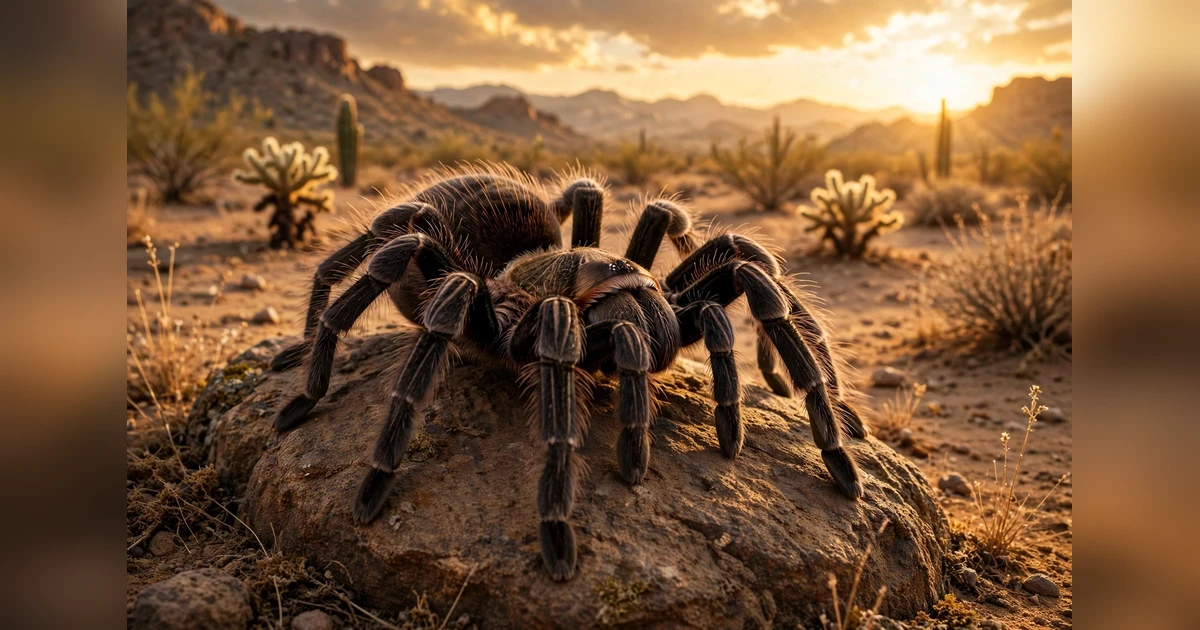
Before the symbolism, it helps to know the animal. Tarantulas are the heavyweights of the spider world, part of the family Theraphosidae. They are ancient, they are global, found on every continent except Antarctica, and they are incredibly diverse. They are not the speed demons some smaller spiders are. Their power is in patience and strength.
Think about their core behaviors: spending long periods in wait, meticulously crafting intricate homes in burrows, the dramatic process of molting to grow, and the females’ legendary longevity. Female tarantulas can live for decades, far longer than most spiders, and far longer than the males. Patience, creativity, rebirth, endurance: these traits did not get assigned randomly. They come from watching how the animal actually lives.
The tarantula is also a ground-dweller, which connects its creative power to the earth itself. While many spiders live in webs high in the air, the tarantula lives close to the ground, in a burrow it builds and defends. That grounded life gives its symbolism an earthly quality. It is about earthly power, patience, and the slow, deliberate building and defense of one’s reality.
Most tarantulas are not dangerous to people. Their bite is often compared to a bee sting, painful but not deadly for a healthy adult. The fear they inspire is far larger than the danger they pose, which is exactly why the tarantula works so well as a symbol of facing fear.
Patience: The Tarantula’s First Lesson
Patience is the tarantula’s most important lesson, and it comes straight from its behaviour. A tarantula can wait for weeks in its burrow. It does not rush. It senses vibrations through the ground, knows when the moment is exactly right, and then strikes with lightning speed. The waiting is not laziness. It is strategy.
That kind of patience is rare in human life. People rush, they force things, they act before the moment is right. The tarantula teaches the opposite: wait, watch, listen, and act only when the time is right. In African cultures, tarantulas are said to symbolize patience and careful planning, because their behaviour of waiting for prey shows the wisdom of strategic action.
People who resonate with tarantula energy are often masters of patience. They understand that good things, relationships, projects, personal growth, are built over long periods of quiet dedication. They do not rush. They know that the waiting is part of the work, not a delay of it.
Patience also means trusting the process of transformation. A tarantula does not hurry its molting. It does not force growth. It grows when it is ready, and it sheds what no longer fits when the time comes. That is a lesson for anyone who feels stuck, or who wants change to happen faster than it can. The tarantula says: wait, prepare, and strike when the moment is right.
Transformation: Molting and the New Self
Tarantulas represent personal power and transformation, mirroring human experiences of overcoming challenges and embracing change through their molting process. A tarantula grows by shedding its exoskeleton, its hard outer shell, and emerging larger, softer, and new. It does this many times in its life, and each time it is vulnerable for a while, until the new shell hardens.
That vulnerability is part of the symbolism. Transformation is not comfortable. Shedding an old self means being soft and unprotected for a time. But it is the only way to grow. A tarantula that never molts never grows. A person who never sheds old beliefs never changes.
Dreams featuring tarantulas often connect to this idea of transformation. A dream about a tarantula can signal a profound call for personal change, a need to confront and release old patterns, and to embrace a new version of yourself. The molting is the image. The message is: you are outgrowing your old shell, and it is time to let it go.
Transformation also appears in the tarantula’s long life. Females live for many years, growing slowly, molting again and again, becoming larger and stronger over time. That slow, steady growth is a different kind of transformation from the sudden kind. It is the transformation of a lifetime, built one molt at a time.
Shadow Work: Facing What You Fear
The tarantula’s deepest spiritual meaning is shadow work. Shadow work is the practice of confronting the parts of yourself you would rather not see: your fears, your anger, your shame, your hidden desires. The tarantula is a guide for that work, because it is itself a shadow creature, dark, quiet, and feared.
Movies and books love to use tarantulas as symbols of pure terror, the embodiment of a phobia. But spiritually, this is a gift. It points directly to what you are most afraid of. The tarantula does not create the fear. It mirrors it. When you ask what a tarantula means, the honest answer is: look at what you fear, and you will find your answer.
Encountering a tarantula may prompt reflection on fears, serving as a catalyst for personal growth and inner strength. Fear often feels like a heavy weight, but it can also be a powerful catalyst for growth when we face our anxieties head-on.
On the other side, the tarantula can also symbolize fear, stagnation, and avoidance. If you see a tarantula in a negative context, it may be a warning to confront your fears and break free from limiting beliefs or situations. The difference is not in the tarantula. It is in you. Are you facing the fear, or running from it? The tarantula asks that question, and it waits for your answer.
Creativity and the Weaver’s Thread
Spiders are weavers, and the tarantula is no exception. It builds a burrow, lines it with silk, and creates a home from threads it produces from its own body. That act of making something from nothing, of weaving a life from your own resources, is at the heart of spider symbolism.
In many Native American traditions, particularly in the Southwest, spiders are revered as Grandmothers, cosmic weavers. The web is a sacred pattern, a map of how all things are connected. The tarantula, as a ground-dweller, connects this creative power to the earth itself. It weaves not in the air, but in the ground, in the dark, in the quiet places where life begins.
People who resonate with tarantula energy are often weavers of reality. They are highly creative, understanding that they are actively weaving the tapestry of their own life through choices, through patience, and through deliberate action. They do not wait for life to happen to them. They weave it, thread by thread.
Tarantula Symbolism in Native American Traditions
In Native American traditions, spiders, including tarantulas, represent wisdom and patience, highlighting their role in nature‘s balance and interconnectedness. The most important figure is Spider Woman, or Grandmother Spider, a major creator deity who taught humans to weave, symbolizing the weaving of life, fate, and culture.
The Hopi see spiders as creators and protectors. Spider Woman is a grandmother figure, a teacher, and a guardian. She is not a monster. She is a mother of the world, spinning the threads that hold everything together. In some Native American beliefs, tarantulas represent strength and tenacity. They embody themes of transformation and personal power, mirroring the individual’s journey through challenges.
That view is very different from the Western view of the spider as a thing to fear. In the Southwest, the spider is sacred. Its web is a pattern of the universe. Its patience is a virtue. Its creativity is a gift from the gods. The tarantula, as the largest and most grounded of spiders, carries that sacred meaning in its strongest form.
The web is also a symbol of connection. Every thread touches another thread, and a vibration on one side of the web is felt on the other. That is a picture of how life works: everything is connected, and what you do in one place is felt everywhere. The tarantula, sitting in its burrow, sensing vibrations through the ground, lives that truth every day.
The Tarantula Around the World: Greece, Africa, and South America
The symbolic meaning of the tarantula is not universal. It is a mirror reflecting the fears, values, and stories of different cultures. In some cultures, tarantulas are symbols of good luck and success, positive omens suggesting prosperity and favourable outcomes. In others, they are harbingers of death and misfortune, associated with witchcraft, deceit, and betrayal.
In ancient Greece and Rome, the spider’s story begins with Arachne, a talented weaver who challenged the goddess Athena to a weaving contest and was turned into the first spider. This is a foundational Western story about the dangers of challenging the gods, and about arrogance and hubris. The name tarantula itself comes from Taranto, a city in southern Italy, where a local spider’s bite was once blamed for a dancing madness called tarantism. Historically, the belief in tarantism, where a bite was thought to cause severe illness and even madness, added layers of fear and superstition to these creatures.
In African and Caribbean folklore, the spider is often Anansi, a trickster god. Clever, cunning, and sometimes selfish, he uses his wits to weave tales and schemes. A tarantula’s spiritual meaning here touches on using intelligence and strategy to navigate life’s challenges. It is not about brute force. It is about patience, setting a trap or a plan, and waiting for the right moment to act.
In South America, tarantulas may represent fear and mystery. Some indigenous tribes view them as protectors, while others associate them with dark energies, influencing rituals related to protection and cleansing. The Aztecs revered the tarantula as a symbol of aggression and warfare, often associating them with gods of battle. That is a very different tarantula from the patient weaver of the Southwest, and it shows how wide the symbolism runs.
Tarantula Dreams: What They Mean
When you dream of a tarantula, it often reflects deep-seated fears and anxieties, hinting at the need to confront hidden issues. Facing the tarantula in your dream symbolizes tackling unresolved emotions. Such dreams can symbolize unresolved internal conflicts or feelings of being threatened by external circumstances.
A dream featuring a tarantula often signals a profound call for personal transformation. Tarantulas, with their molting behaviour, symbolize the need to confront and release old patterns. They push you to confront hidden fears and suppressed emotions, highlighting unresolved internal conflicts and the need to address darker aspects of yourself.
The details of the dream change the meaning. A tarantula that chases you may mean you are running from a fear in waking life. A tarantula that sits still may mean you need patience, or that a fear is waiting for you to notice it. A tarantula that bites may mean a hidden issue has finally demanded your attention. A tarantula that molts in a dream is a strong sign of transformation, of shedding an old self.
Color symbolism also plays a role in how cultures interpret tarantulas in dreams. White tarantulas often symbolize healing and hope. Black tarantulas are linked to dishonesty and terror, bringing feelings of fear and unease. Like a color that changes with light, a tarantula in a dream changes with its color. The animal stays the same, but the color paints the meaning.
Folklore often ties tarantulas to witchcraft and deceit, influencing how they appear in dreams and the meanings attached to their colors. But a dream is not a prophecy. It is a mirror. The tarantula in your dream is showing you something about yourself, and the meaning depends on what you are afraid of, what you are avoiding, and what you are ready to change.
The Tarantula as a Spirit Animal and Totem
In modern spiritual circles, the idea of spirit animals is popular. If you feel a persistent draw to the tarantula, not just a fear, it might be speaking to you as a guide. The tarantula spirit animal represents creativity, independence, and intuition. The tarantula as a power animal represents courage, resilience, and transformation. Those who call upon the tarantula as their power animal are encouraged to face their fears head-on and embrace change with grace and courage.
People who resonate with tarantula energy are often independent. They are comfortable alone. They do not need constant company or approval. Like the tarantula in its burrow, they are happy in their own space, working quietly on their own projects, waiting for the right moment. That independence is not loneliness. It is self-reliance.
The tarantula also teaches intuition. It senses vibrations through the ground, feeling what it cannot see. People with tarantula energy often have strong intuition, a sense of what is coming before it arrives. They trust that sense, and they act on it. That is a gift, and it is one the tarantula models every day.
If you are living in fear, the tarantula might appear as a warning to look at that fear. If you are avoiding a change, it might appear as a reminder that molting is necessary. If you are rushing, it might appear as a call to patience. The spirit animal does not shout. It waits, quietly, until you are ready to listen.
Tarantula Tattoo Meaning
For many people, the tarantula’s meaning is worn on the skin. A tarantula tattoo is a popular choice, and its meaning is usually personal, but the common readings are resilience, fearlessness, and transformation.
To a modern tattoo enthusiast, a tarantula might be a badge of resilience, a mark of someone who has faced fear and survived it. It can mean, “I was afraid, and I did it anyway.” It can also mean patience, creativity, or a connection to nature and the earth. Some people choose it as a symbol of shadow work, a reminder that they have faced their dark side and come through it.
Frequently Asked Questions
What does a tarantula symbolize?
A tarantula symbolizes patience, transformation, and the courage to face fear. It also represents creativity, resilience, shadow work, and earthly power.
What is the spiritual meaning of a tarantula?
The spiritual meaning of the tarantula is about shadow work: confronting what you fear, sitting patiently with discomfort, and weaving your reality from your own experiences. It is a teacher of resilience and transformation.
What does it mean to dream of a tarantula?
Dreaming of a tarantula often reflects deep fears and anxieties, and a need to confront hidden issues. It can also signal transformation, because the tarantula’s molting symbolizes shedding an old self and embracing growth.
Is a tarantula a good omen or a bad omen?
It depends on the culture. In some traditions, tarantulas are symbols of good luck and success. In others, they are seen as omens of misfortune or deceit. In modern spiritual readings, the tarantula is usually a guide, not a warning, asking you to face fear and be patient.
What does a tarantula tattoo mean?
A tarantula tattoo usually means resilience, fearlessness, and transformation. It can mark someone who has faced fear and survived it, or who values patience and creativity.
What is the tarantula spirit animal?
The tarantula spirit animal represents creativity, independence, and intuition. As a power animal, it represents courage, resilience, and transformation, encouraging you to face fears head-on and embrace change.
Final Thoughts
The tarantula is a creature of contradictions. It is feared and revered, patient and sudden, creative and destructive, dark and illuminating. That is why its symbolism is so rich. It does not offer a single, simple meaning. It offers a mirror, and the meaning you see in it depends on what you bring to it.
If you fear the tarantula, ask yourself what you are really afraid of. If you admire it, ask yourself what patience or transformation you are ready for. If you keep seeing it, in dreams, in stories, in life, ask yourself what it is trying to tell you. The tarantula does not shout. It waits, quietly, in its burrow, sensing the vibrations of the world. When the moment is right, it acts.
That is the tarantula’s lesson, and it is a simple one. Be patient. Face what you fear. Shed what no longer fits. Weave your own life, thread by thread, and trust that the waiting is part of the work. When friends talk about the tarantula, they often say it taught them to be brave, not by removing fear, but by showing them that fear is a door, not a wall. Walk through it, and you will find the other side is wider than you thought.
For a deeper look at the tarantula’s place in nature, from its burrow to its web, see how it fits into the world around it. The animal and its meaning are tied together, and understanding one helps you understand the other.