Bonsai Symbolism: Meaning, History, and Spiritual Lessons
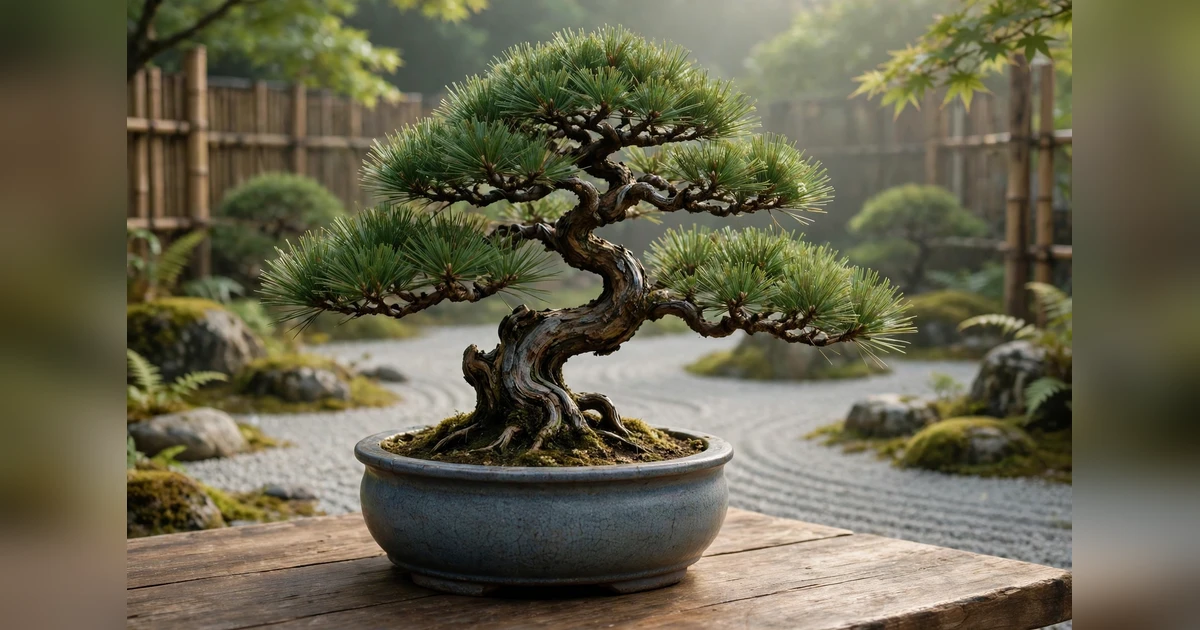
A bonsai tree symbolizes patience, harmony, balance, resilience, and longevity. It is a full tree, grown small, and that smallness is the heart of its meaning. A bonsai shows that great things can come in small packages, that a living thing can thrive with limited resources, and that slow, careful work over many years can create something beautiful.
The word “bonsai” comes from the Japanese words “bon,” meaning tray, and “sai,” meaning a tree that is planted. Together, they mean “a tree planted in a shallow container.” But the bonsai is much more than a tree in a pot. It is an art form, a meditation, and a symbol that has been valued for over a thousand years.
What Is a Bonsai Tree?
A bonsai is a miniature tree grown in a pot, carefully pruned and shaped to keep it from growing to its natural height. A typical bonsai tree measures between three and forty inches in height, making it a miniature version of larger trees found in nature. It is not a special species of tree. Almost any tree can become a bonsai, if it is grown with patience and skill.
The art of bonsai involves taking a young plant and cultivating it in such a way as to create an aesthetically pleasing, miniature version of its full-sized counterpart. The grower prunes the roots, trims the branches, wires the trunk into shape, and repots the tree every few years. The tree stays small, but it stays alive, and it can live for decades, even centuries, with proper care.
That long life is part of the symbolism. A bonsai is not a decoration that you buy and forget. It is a living thing that needs daily attention, and it rewards that attention by growing more beautiful with age. The older a bonsai is, the more valued it becomes.
The History of Bonsai: From China to Japan
The art of bonsai originated in China more than a thousand years ago. The Chinese word was “punsai,” which literally means growing trees in pots or trays. When bonsai trees were first introduced to China more than 1,300 years ago, they were seen as a symbol of elite status in society. Only the wealthy could afford them, and they were displayed as signs of prestige and honour.
From China, the art travelled to Japan, where it was refined and perfected. Japanese monks, especially Zen Buddhist monks, developed the dwarfed trees in monasteries as a spiritual practice to inculcate peace and tranquillity. For the monks, growing a bonsai was not a hobby. It was a form of meditation, a daily practice of patience, attention, and respect for nature.
Japan adopted and refined the practice, embedding the bonsai within its aesthetics and societal norms, associating it with concepts like patience, discipline, and respect for nature. Over centuries, bonsai became a central part of Japanese culture, and from Japan it spread to the rest of the world, where it is now practised by millions of people.
The Core Meaning: Patience
The first and most important meaning of bonsai is patience. Growing a bonsai tree requires patience and meticulous care, encompassing years of pruning, shaping, and nurturing. A bonsai cannot be rushed. It grows at its own pace, and the grower must learn to wait.
That patience is deeply intertwined with the symbolism of the bonsai. It makes the tree an object that represents discipline and the dedication necessary for long-term projects. When you grow a bonsai, you are making a promise to the future: you are saying that you will care for this tree for years, even decades, and that you will not give up when the results are slow.
In a world that values speed, the bonsai is a reminder that some things cannot be hurried. A tree does not grow faster because you are impatient. It grows when it is ready, and the grower’s job is to be there when it does. That lesson applies far beyond the garden. It applies to any long goal: learning a skill, building a relationship, or growing a business. Patience is not passive. It is active care, repeated every day.
Harmony and Balance
A bonsai plant symbolizes harmony and balance. It has been used throughout the centuries as a symbol of peace, resilience, serenity, and patience. The bonsai is a balance of opposites: a tree that is small but strong, old but alive, shaped by human hands but still natural.
The art of bonsai is about finding the balance between the tree’s nature and the grower’s vision. The grower shapes the tree, but the tree also shapes the grower. If the grower forces the tree too hard, it dies. If the grower does nothing, the tree grows wild and loses its form. The balance is in the middle: gentle guidance, year after year.
That balance is also visible in the tree itself. A good bonsai has a balance between its roots, its trunk, and its branches. The roots anchor it. The trunk gives it strength. The branches reach outward. When those three parts are in harmony, the tree looks right, even to someone who knows nothing about bonsai. The eye sees the balance before the mind understands it.
Longevity and Resilience
The bonsai’s ability to thrive despite being confined within a small container has long symbolized longevity and resilience. This profound characteristic links to the concept of perseverance and the ability to adapt to challenges. A bonsai lives in a tiny pot, with limited soil and limited water, yet it can live for hundreds of years, sometimes thousands, with proper care.
In Eastern religions like Buddhism and Taoism, bonsai trees represent longevity since they are capable of living hundreds if not thousands of years with proper care. The oldest living bonsai on record is believed to be a banyan tree, or Ficus benghalensis, whose vast root system reaches deep into the soil and helps it draw life-sustaining nutrients for up to 100 years and more.
That resilience is a lesson. The bonsai does not complain about its small pot. It adapts. It grows strong roots, it uses its resources carefully, and it survives. When life puts you in a small space, with limited resources, the bonsai says: you can still grow. You can still be beautiful. You can still last.
Serenity and Mindfulness
The act of nurturing a bonsai tree can be a meditative practice. Caring for a bonsai is a daily ritual: watering, checking the soil, trimming a leaf, turning the pot so the light reaches all sides. Those small actions, repeated every day, create a quiet space in the grower’s life.
In Zen Buddhism, caring for a bonsai is a meditation, a daily practice of patience and attention that connects the grower with nature itself. The grower is not thinking about the past or the future. They are looking at the tree, here, now, and responding to what it needs. That is mindfulness in its simplest form.
A bonsai tree serves as a powerful reminder of the interconnectedness of nature and humanity. Its symbolism of resilience, patience, and connection with nature makes it a deeply meaningful object of contemplation and appreciation. When you sit with a bonsai, you are sitting with a piece of nature that you have helped to shape, and that has helped to shape you.
Bonsai and Wabi-Sabi: Beauty in Imperfection
Bonsai also reflects the Japanese notion of Wabi-Sabi, which is an aesthetic centred around finding beauty in imperfection, or accepting the natural cycle of growth and decay, that nothing lasts forever yet everything remains beautiful. A bonsai is not perfect. Its trunk is twisted. Its branches are uneven. Its bark is rough. And that is exactly what makes it beautiful.
Wabi-Sabi teaches that imperfection is not a flaw. It is a sign of life. A tree that has survived storms, droughts, and pruning carries those experiences in its shape. The twist in its trunk is a record of the wind. The scar on its bark is a record of a hard year. The bonsai does not hide those marks. It displays them.
That is a lesson for anyone who feels imperfect. The bonsai says that your scars, your twists, and your uneven parts are not things to hide. They are the proof that you have lived, and that you have survived. Beauty is not in being flawless. Beauty is in being real.
Bonsai in Chinese Culture: The Miniature Cosmos
In China, where bonsai began, the miniature tree often symbolized the miniature cosmos, reflecting the interconnectedness of the macrocosm and microcosm. The idea is that a small thing can contain the whole universe. A bonsai in a pot is a mountain, a forest, and a river, all in miniature. When you look at a bonsai, you are looking at the world in small form.
Buddhism further amplified this symbolism, emphasizing the concept of enlightenment through appreciating the intricate details and beauty found in nature’s miniature form. The small tree teaches a big lesson: the universe is not only in the vast mountains and the wide oceans. It is also in a tiny pot on a windowsill, if you look closely enough.
In Chinese culture, it is believed that different elements of bonsai shape bring good luck or negative energy depending on what they represent. For example, if someone owns a pine tree-shaped pottery vase with five leaf branches it may be considered lucky, because pine leaves typically represent longevity while five represents prosperity. The details matter, and each detail carries a meaning.
What Different Bonsai Species Mean
Each type of bonsai tree holds its own symbolic significance. Different species of bonsai trees carry their own distinct spiritual meanings, and choosing a species is part of choosing the message.
Juniper trees symbolize protection, resilience, perseverance, and strength. The juniper is a hardy tree that survives in harsh conditions, and its bonsai form carries that toughness in miniature. A juniper bonsai is a good gift for someone facing a hard time, because it says: you are strong, and you will endure.
The most common type of bonsai is the Japanese White Pine tree, known in Japan as goyomatsu, which symbolizes strength and longevity. The pine is an evergreen, green in all seasons, and its long life makes it a symbol of endurance. A pine bonsai is a good gift for a birthday, a retirement, or a new beginning, because it says: may you live long and stay strong.
Other species carry their own meanings. Maple bonsai, with their brilliant autumn colours, symbolize change and the beauty of letting go. Cherry bonsai, with their brief spring blossoms, symbolize the fleeting beauty of life. Ficus bonsai, with their aerial roots, symbolize adaptability and connection. When you choose a bonsai, you are choosing a meaning, and that meaning becomes part of the gift.
What Bonsai Styles Mean
The shape of a bonsai tree carries deep meaning too. Different styles, the way the trunk grows, the way the branches spread, each tell a different story.
A formal upright style, with a straight trunk and balanced branches, symbolizes strength, stability, and dignity. It is the most traditional style, and it represents a tree growing in ideal conditions.
An informal upright style, with a slightly curved trunk, symbolizes grace and natural growth. It is a tree that has bent a little with the wind, but has not broken.
A slanting style, where the trunk leans to one side, symbolizes resilience in the face of wind and weather. It is a tree that has been pushed, but has kept growing.
A cascade style, where the branches fall downward like a waterfall, symbolizes humility and letting go. It is a tree that grows on a cliff, reaching down toward the water below.
Each style is a different story, and the grower chooses the style that fits the tree and the message they want to tell.
Bonsai as a Gift: What It Means to Give One
Giving a bonsai as a gift is a meaningful act, because a bonsai is not a thing you use up and throw away. It is a living thing that needs care, and giving one says: I trust you to care for this, and I want you to have something that grows with time.
A bonsai is a good gift for many occasions. For a new home, it means harmony and balance in the new space. For a birthday, it means longevity and good health. For a graduation, it means patience and the promise of growth. For a friend going through a hard time, it means resilience and the reminder that small things can be strong.
When you give a bonsai, you are also giving a responsibility. The recipient must water it, prune it, and care for it. That responsibility is part of the gift. It says: this matters, and it needs you. A bonsai is not a gift you forget. It is a gift that stays, and grows, and reminds the recipient of you every time they look at it.
Bonsai in Daily Life: A Practice, Not a Possession
A bonsai is not something you own. It is something you practise. The daily care, the watering, the trimming, the watching, is the point. The tree is the teacher, and the grower is the student.
That practice teaches lessons that go beyond gardening. It teaches patience, because a bonsai grows slowly. It teaches attention, because a bonsai shows you when it needs water or light. It teaches humility, because a bonsai will die if you neglect it, no matter how skilled you are. And it teaches hope, because a bonsai that looks dead can come back to life with care.
Like a color that changes with light, a bonsai changes with the seasons, green in spring, gold in autumn, bare in winter. That change is part of its beauty. The bonsai does not stay the same. It grows, it sheds, it rests, and it blooms again. Watching that cycle, year after year, is a reminder that life also moves in cycles, and that every season has its own beauty.
Bonsai in Popular Culture
Bonsai has appeared in films, books, and television for decades, and each appearance has added to its meaning. The most famous is in the film The Karate Kid, where Mr. Miyagi tends his bonsai trees with quiet care, and teaches his student that the same patience and balance apply to martial arts and to life. The bonsai in that film is not a decoration. It is a teacher, and Mr. Miyagi’s gentle way with the tree shows his whole philosophy: calm, patient, and strong.
Bonsai also appears in gardens, museums, and exhibitions around the world. The National Bonsai and Penjing Museum in Washington, D.C., holds trees that are hundreds of years old, including a Japanese white pine that survived the atomic bombing of Hiroshima. That tree, cared for by generations of one family, is a living symbol of resilience: it survived a war, and it is still growing.
In popular culture, the bonsai has become a shorthand for patience and wisdom. When a character tends a bonsai, the audience understands immediately: this is a person who thinks deeply, who takes their time, and who values quiet work over loud display. That is a powerful image, and it is why the bonsai keeps appearing in stories.
Frequently Asked Questions
What does a bonsai tree symbolize?
A bonsai tree symbolizes patience, harmony, balance, resilience, longevity, and serenity. It represents the idea that great things can come in small packages, and that slow, careful work over many years creates beauty.
What is the spiritual meaning of a bonsai tree?
Spiritually, a bonsai represents harmony between humans and nature, mindfulness, and the Zen practice of patience and attention. Caring for a bonsai is considered a form of meditation that fosters wisdom and helps you connect with your higher self.
What does giving a bonsai as a gift mean?
Giving a bonsai means you are giving a living symbol of patience, longevity, and harmony. It says you trust the recipient to care for it, and you want them to have something that grows more beautiful with time.
Is a bonsai tree good luck?
In many cultures, bonsai trees are considered symbols of harmony, balance, patience, and luck. In Chinese culture, certain shapes and species, like pine with five branches, are believed to bring longevity and prosperity.
How long can a bonsai tree live?
With proper care, a bonsai can live for decades, and some have lived for centuries. The oldest living bonsai on record is believed to be over 100 years old, and some trees in Japan are said to be several hundred years old.
What does a juniper bonsai symbolize?
A juniper bonsai symbolizes protection, resilience, perseverance, and strength. It is a good gift for someone facing a difficult time.
Final Thoughts
The bonsai is a small tree with a large meaning. It teaches patience, because it grows slowly. It teaches harmony, because it balances nature and human care. It teaches resilience, because it thrives in a small pot. It teaches serenity, because caring for it is a meditation. And it teaches longevity, because it can outlive the person who planted it.
When you look at a bonsai, you are looking at a lifetime of small decisions: a cut here, a wire there, a watering every morning. None of those decisions is dramatic on its own. Together, they create something beautiful.
That is the deepest lesson of the bonsai. A good life, like a good tree, is not built in a day. It is built slowly, with patience, attention, and care. The bonsai reminds us that small, steady work, repeated over many years, can create something that lasts.